Article
April 3, 2026
4 min read
What Early-Talent Recruiting Reveals About Leadership
Early-talent recruiting makes a company’s leadership standards visible through communication, follow-through, and respect for candidates’ time.
By Cristiano Pierry
Early Talent Recruiting
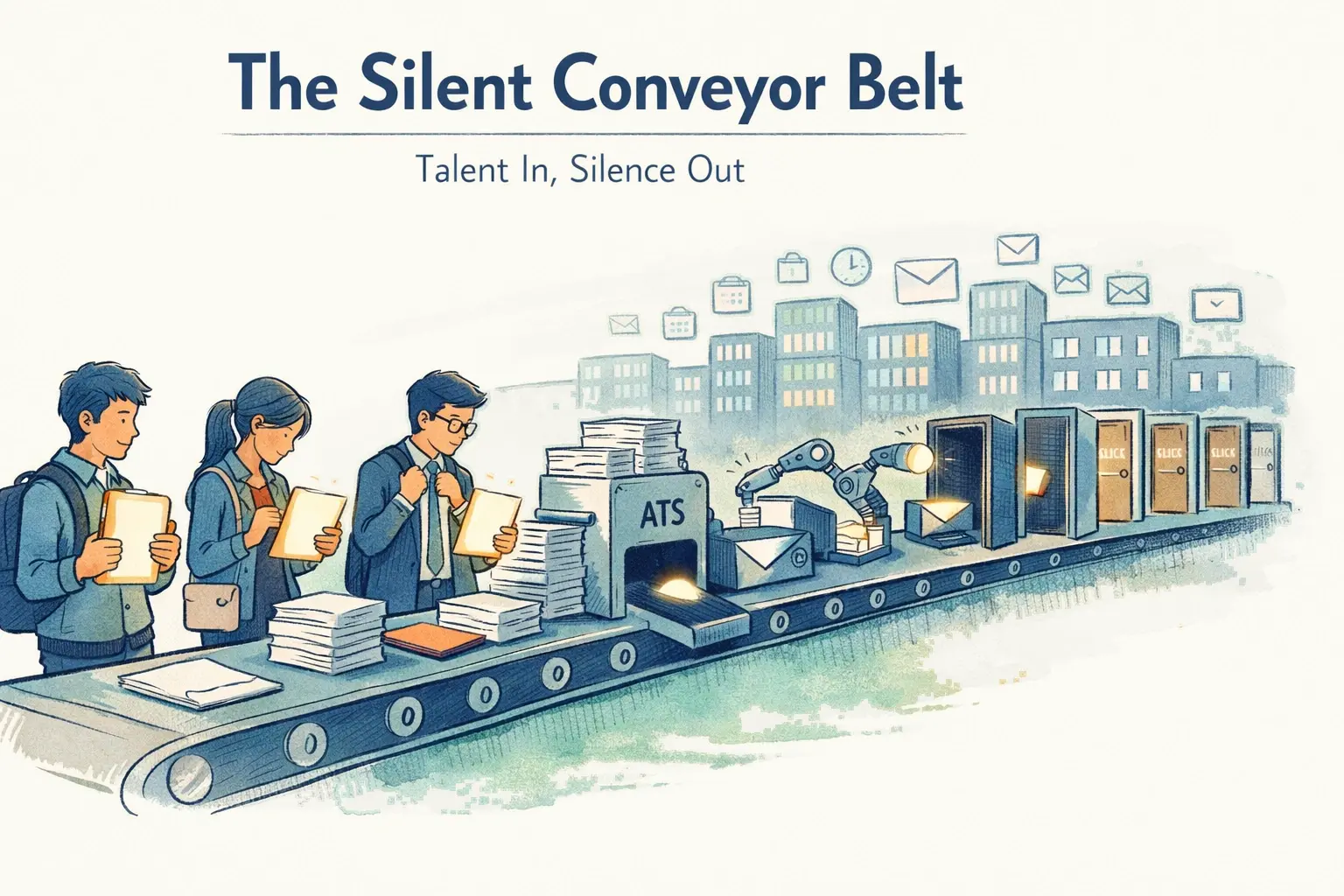
Companies invest heavily in removing friction from customer journeys, yet early-talent recruiting can still be slow, opaque, and inconsistently owned. We should apply the same discipline to candidate experience that we expect in our consumer products.
Over the past few years, I have spent time mentoring and guiding college students as they make the transition from campus to the workforce. In that time, I have seen too many recruiting processes lack clear ownership and follow-through.
Students are not casually submitting random applications and moving on. Many are reading job descriptions carefully, tailoring resumes, writing thoughtful cover letters, completing long application forms, and preparing seriously for interviews. They are investing real time and effort into each opportunity. Too often, what they get in return is silence. No update. No rejection. Sometimes not even a basic acknowledgment that their application was received.
That falls below the professional standard candidates deserve.
Once the interview process begins, the experience can get worse. Interviews are scheduled and then moved at the last minute. Recruiters do not show up. Follow-up emails go unanswered. Candidates are expected to be punctual, prepared, polished, and flexible, while employers do not always hold themselves to the same standard.
We should remember something simple:
For those of us already in the workforce, an interview can feel like just another meeting squeezed into a crowded calendar.
For the candidate, especially a student or early-career applicant, that same meeting may be the highlight of the day.
They have prepared for it, built their schedule around it, and attached real hope to it. When we cancel casually, reschedule repeatedly, or disappear afterward, we are doing more than creating inconvenience. We are showing them exactly how little we value their time.
Interviews are not one-way evaluations. The company is trying to determine whether the candidate is the right fit for the role. At the same time, the candidate is trying to determine whether the company is a place where they can learn, grow, and be supported. Too many organizations still behave as though the company is the only party making a choice.
I have seen students turn down roles that looked stronger on paper because another employer did a much better job explaining the human side of the opportunity. Who will help me ramp up? What mentorship is available? How will I learn? What support systems are in place if I struggle? A company name and a job title do not answer those questions. A thoughtful recruiting process does.
A recent event brought this whole issue to mind. A student was scheduled for three interviews with an established technology company. The first interview happened on time. The second was rescheduled at the last minute. The third was canceled and never rebooked, even after the student followed up more than once. Weeks later, the recruiter called to offer the role, even though that third interview had never taken place and the student's emails had gone unanswered. The student declined, not because the role was not a good fit, but because the process had already answered the most important question: What would it feel like to work here?
The increasing use of AI in recruiting also deserves more scrutiny. While technology can help with scale, scheduling, and workflow, it must never become an excuse for removing accountability. If AI screening or interview tools are used to filter students and then leave them in limbo, with no feedback, no closure, and no human oversight, that is not efficiency. It is a failure of candidate experience delivered at scale.
For many students, the recruiting process is their first meaningful interaction with a company. Before they know the team, the manager, or the day-to-day culture, they learn from the process itself. They learn whether the company communicates clearly, respects commitments, and treats people as though they matter.
Early-talent recruiting shows how a company practices its stated respect for people.
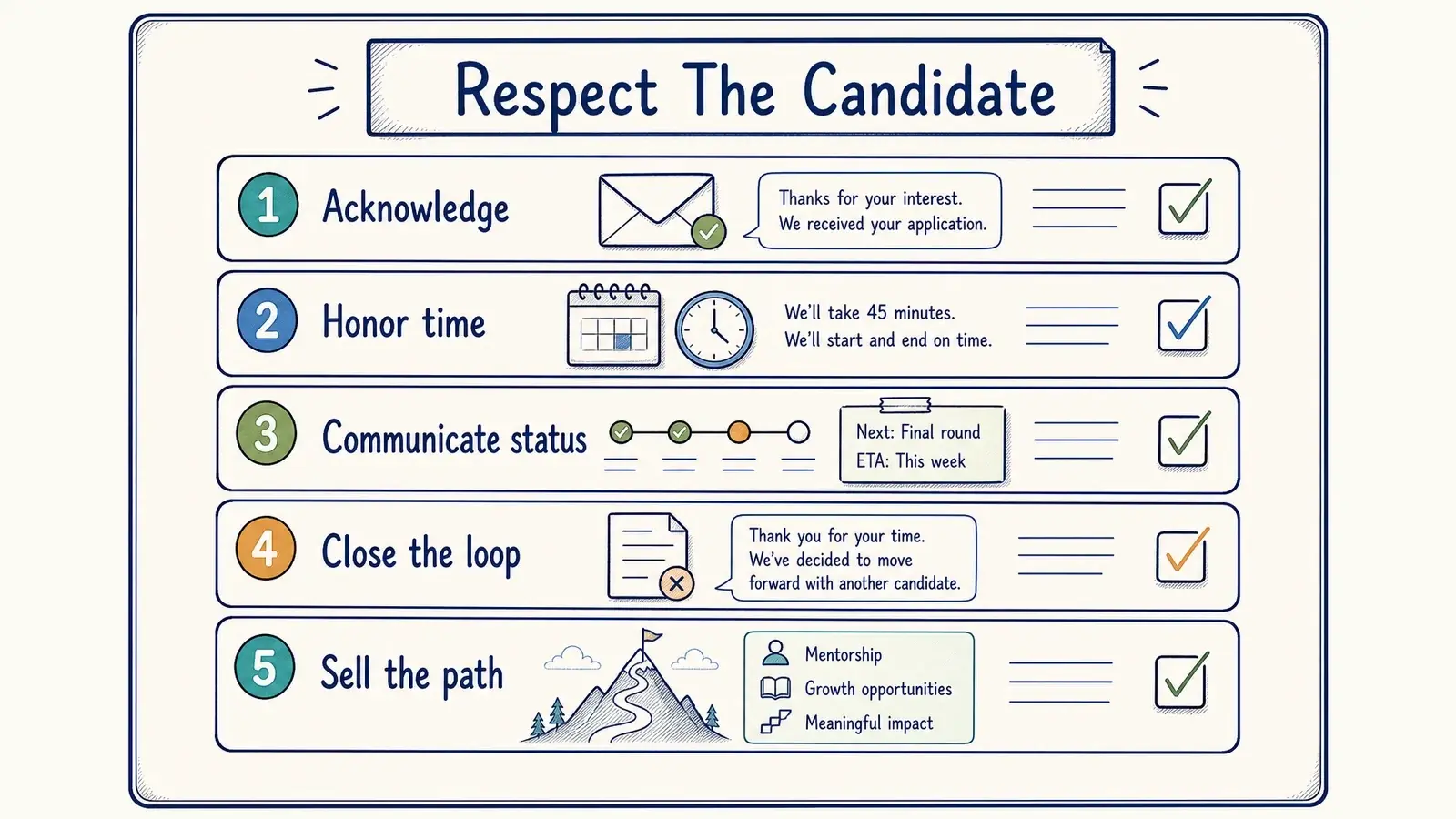
The standard is straightforward:
- Acknowledge every application.
- Honor interview time as a real commitment.
- Communicate timelines and status clearly.
- Close the loop with all candidates, regardless of outcome.
- Sell the opportunity, explain the mentorship, support, and path to growth.
If you want strong junior talent, you need to explain not just the work, but the environment in which that person will be expected to succeed. You also need to engage with and respond to applicants, especially those already in the interview process.
Companies that get this right build trust with students, universities, and future talent pipelines. More importantly, they make their stated culture visible in the way they treat a person before that person has any power inside the organization.
Students notice how they are treated, and their peers notice too. Early-talent recruiting is one of the clearest places where a company’s values are either proven or contradicted.
This writing reflects my personal perspectives on product management, AI, and content discovery. It does not represent the official position of my employer or any affiliated organization.