Article
July 10, 2026
3 min read
The Best AI Will Not Ask You to Choose a Model
AI products will earn broader adoption when they translate user intent into the right capability, instead of making people configure the machinery.
By Cristiano Pierry
AI is becoming more capable, and less legible
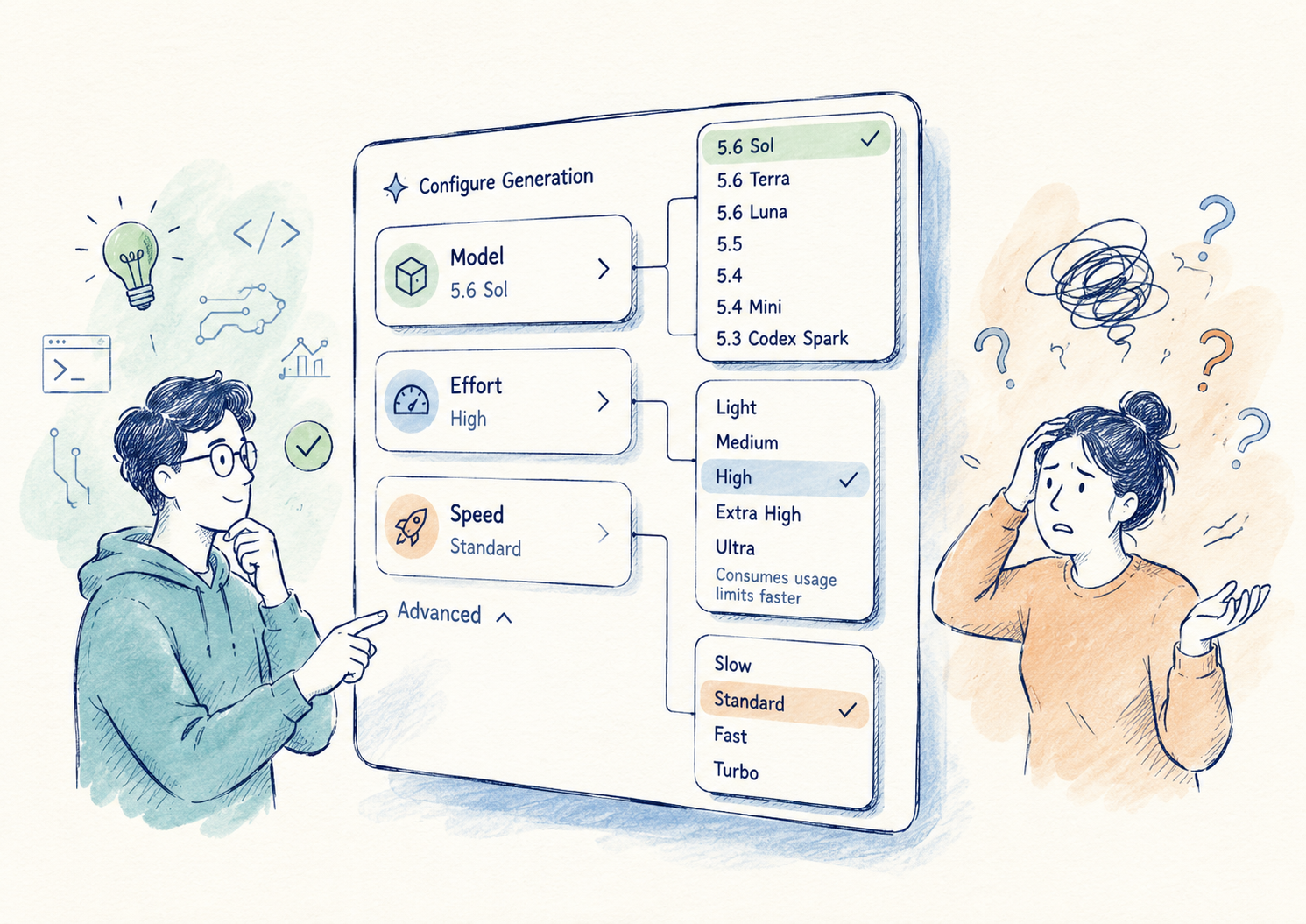
This is what using advanced AI increasingly looks like:
- Choose a model.
- Choose an effort level.
- Choose a speed.
- Decide whether "High" is sufficient, or whether the task requires "Extra High" or "Ultra."
Then determine whether the additional quality is worth the latency, cost, or usage limits.
For someone working in technology, we have learned to interpret model names, version numbers, context windows, reasoning modes, latency tradeoffs, and token economics. We understand that a coding task may need a different model than a quick summary. We can make an educated guess about when more inference time might produce a better answer.
For most people, this interface is needlessly difficult to interpret.
A teacher does not want to choose between seven models before creating a lesson plan. A small business owner does not want to understand inference-time compute before analyzing a spreadsheet. A parent does not want to select a reasoning effort before asking for help planning a trip.
They simply want the system to understand what they are trying to accomplish.
This is a familiar stage in the evolution of technology. Early products expose the machinery. Mature products absorb the complexity.
We saw this with computers, cameras, networking, cloud infrastructure, and search engines. Experts initially operated the controls directly. Over time, the product learned to make more of those decisions on the user's behalf.
AI appears to be reaching the same inflection point.
Model selection, reasoning effort, speed, cost, and quality are legitimate dimensions of the underlying system. Advanced users should be able to access them. But they should not become prerequisites for participation.
The product should take responsibility for translating user intent into the right configuration.
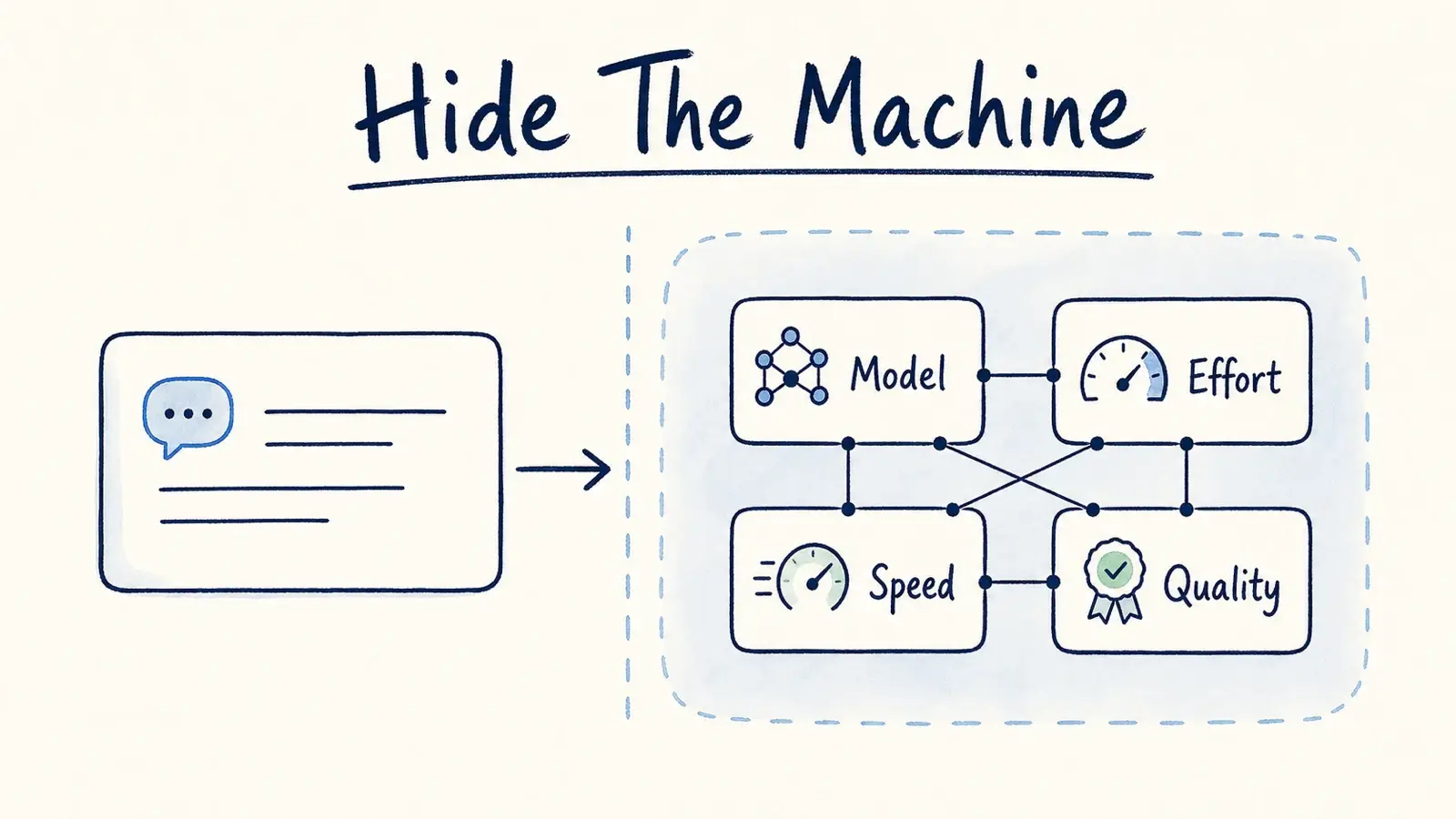
The product should understand:
- Is this a quick factual question or a complex analysis?
- Does the answer need to be immediate, or is the user willing to wait for higher quality?
- Is the task creative, technical, analytical, or operational?
- What level of accuracy, depth, and verification does the situation require?
In most cases, the system should route the request automatically, apply sensible defaults, and only surface controls when they are useful.
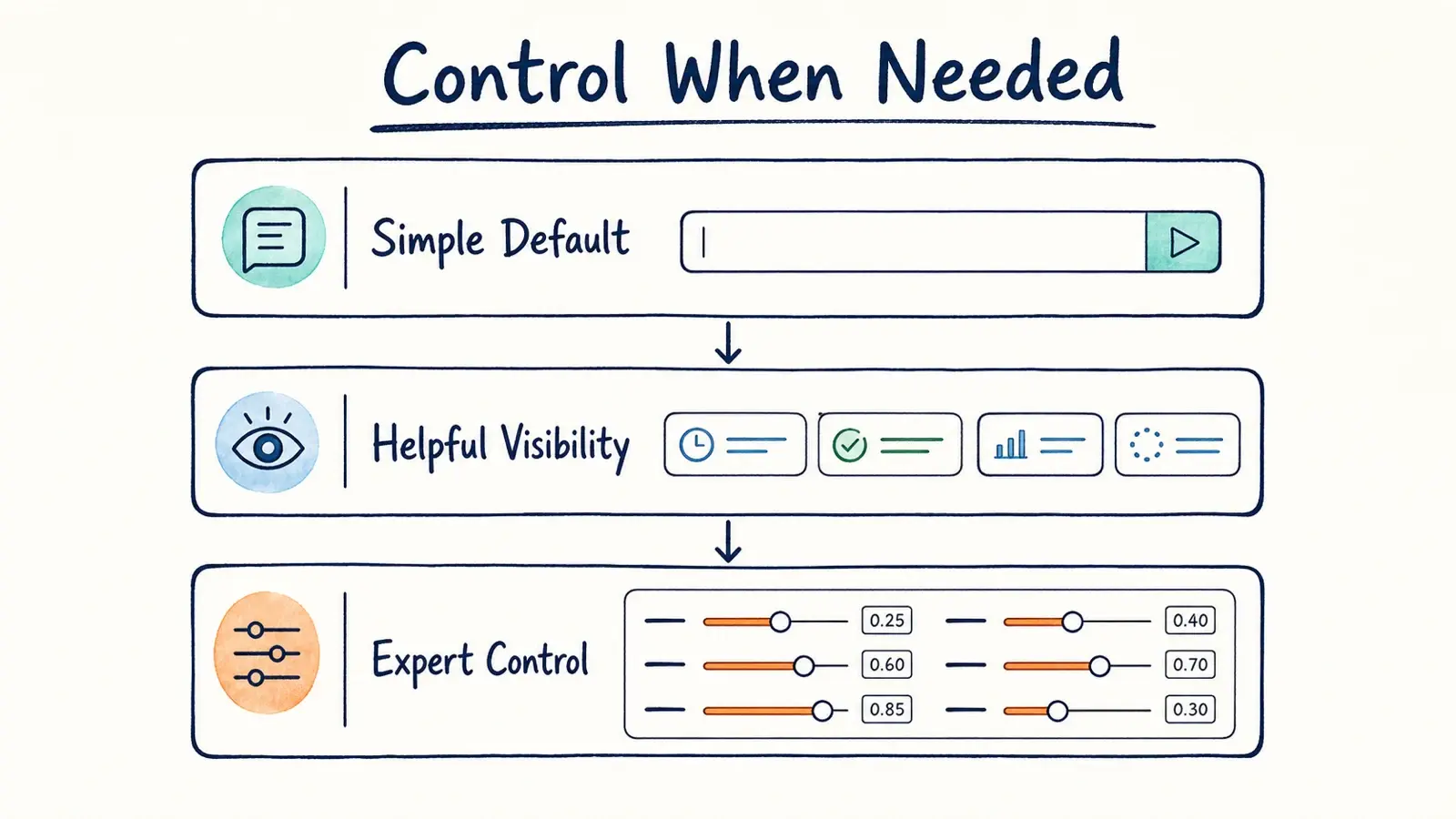
That means designing progressive control.
- A simple interface for most people.
- More visibility for those who need it.
- Deep configuration for experts.
The current proliferation of models and settings is evidence of rapid technical progress, but it is also a warning about product complexity.
Sophisticated technology should produce a simpler experience, not a more demanding configuration screen.
The best AI interface will choose well by default and ask for expert intervention only when the choice is genuinely useful.
This writing reflects my personal perspectives on product management, AI, and content discovery. It does not represent the official position of my employer or any affiliated organization.