Work in progress
Don’t Inherit the Tool. Inherit the System.
Why AI-assisted projects should be built around portable artifacts, not tool-specific workflows.
I recently worked on a project using LLM-assisted development tools.
The goal was to convey a concept in a more interactive way. Rather than explaining the idea only through a static document, I wanted to create something people could explore directly. They could interact with it, change inputs, observe behavior, and build intuition through use.
At one point, someone asked: if a project was initially created with one LLM development tool, does that make it harder to continue the work using another?
For example, what if the first version was developed with OpenAI Codex, but the next person prefers Cursor or Claude Code? Does the original tool become a dependency? Does the project somehow belong to the environment where it started?
This points to a misconception we will see more often as LLM-assisted development becomes normal.
The tool is not the project.
This is not like writing a system in C and handing it to someone who only knows Python. In that case, the programming language, runtime, libraries, and toolchain are real constraints. They shape what the next developer can reasonably do.
But Codex, Cursor, Claude Code, and similar tools are not the underlying language of the project. They are not the runtime. They are not the architecture. They are not the product.
They are collaborators. Interfaces. Different ways of operating on the same underlying system.
The real project lives in the codebase, architecture, documentation, tests, instrumentation, setup instructions, product intent, data contracts, evaluation criteria, and the decisions that explain why the system behaves the way it does.
If those artifacts are strong, the work is portable.
A project initially developed with Codex can be continued in Cursor. A project explored in Claude Code can be reviewed with Codex. A design discussion in one tool can become an implementation task in another. One assistant can write a first draft, another can critique it, and a third can help test or refactor it.
That portability also lets a team use different tools for design reasoning, implementation, review, or edge-case analysis while keeping the project coherent.
If the only durable artifact from an LLM-assisted project is a long conversation inside one tool, then the project is fragile. The next person has to reconstruct intent from chat history. They have to infer what decisions were made. They have to guess how to run it, where to change it, what matters, and what might break.
But if the project is built correctly, the conversation is not the handoff. The system is the handoff.
The durable output of LLM-assisted development is not the conversation you had with a tool. It is the legible, runnable, testable system you leave behind.
That means being deliberate about the handoff. Can someone clone and run the project, understand its components and data flow, inspect its assumptions, test a change, diagnose a failure, and see what remains provisional? Can they bring their preferred development tool and still be productive?
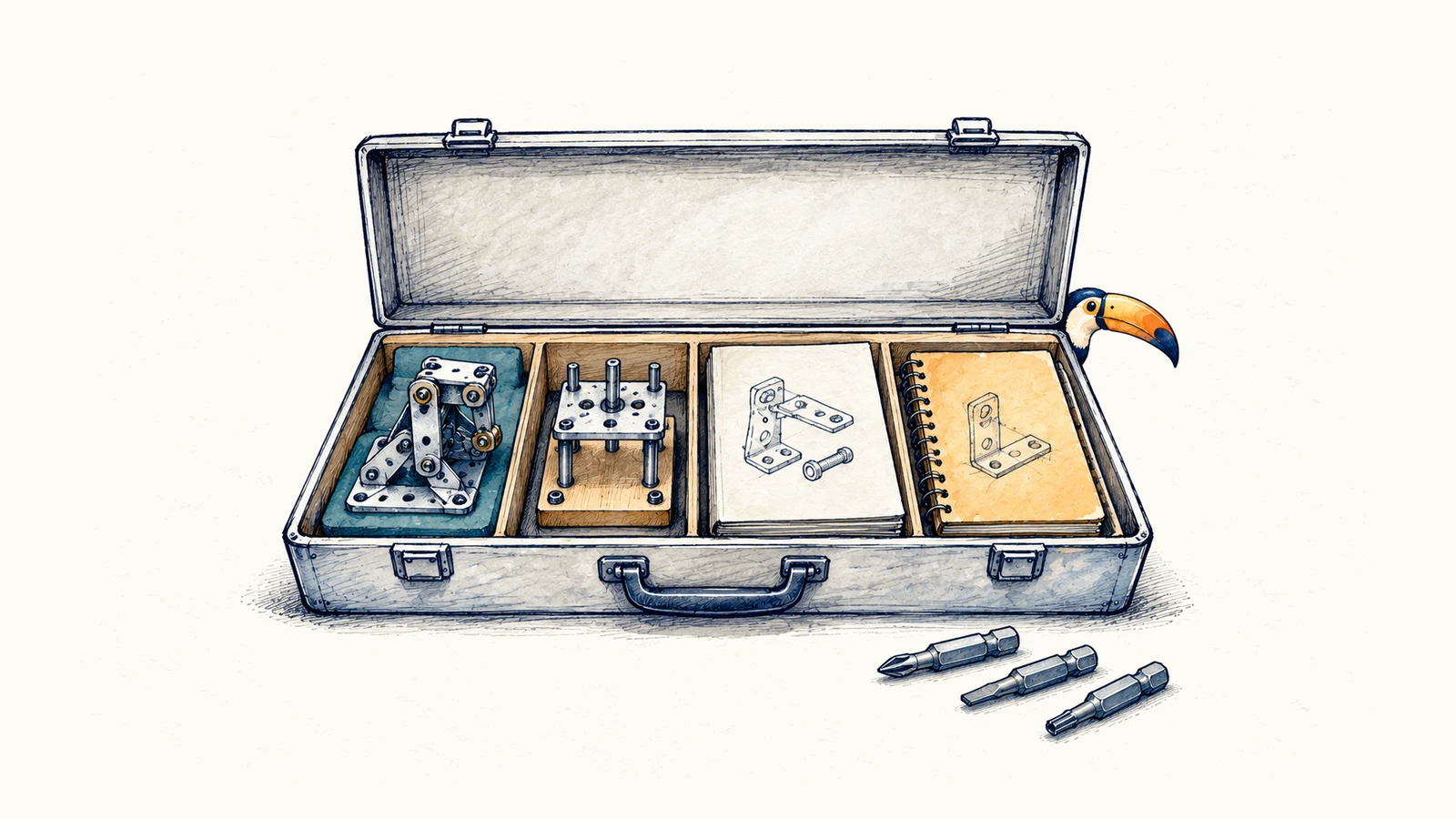
This is especially important as more teams adopt LLM-assisted development. We should not create a new kind of tool dependency where people feel blocked because they do not have access to the exact assistant or environment that generated the original implementation.
We want to enforce artifact-driven development.
The assistant may accelerate the work, but the project has to stand on its own.
A good handoff should not be: “You need the same LLM tool I used.”
A good handoff should be: “Here is the system. Here is how it works. Here is how to run it. Here is how to evaluate it. Here are the important decisions. Here are the known limitations. Here is where you can safely extend it.”
That is what makes ownership transferable.
Tool choice matters tactically, but it should not define long-term maintainability. The better handoff question is: “Is this project understandable enough for someone else to own?”
If the answer is yes, the next person can choose the tool that fits their workflow. The project belongs to the people who can understand it, validate it, improve it, and carry it forward.