Work in progress
Why Strong PMs Are Becoming Builders
Product management remains a cross-functional leadership role, but that description is no longer sufficient.
The next generation of great PMs will need more than better requirements, cleaner roadmaps, and tighter stakeholder meetings. AI, faster prototyping, and more algorithmic products are collapsing the distance between idea, implementation, evaluation, and launch.
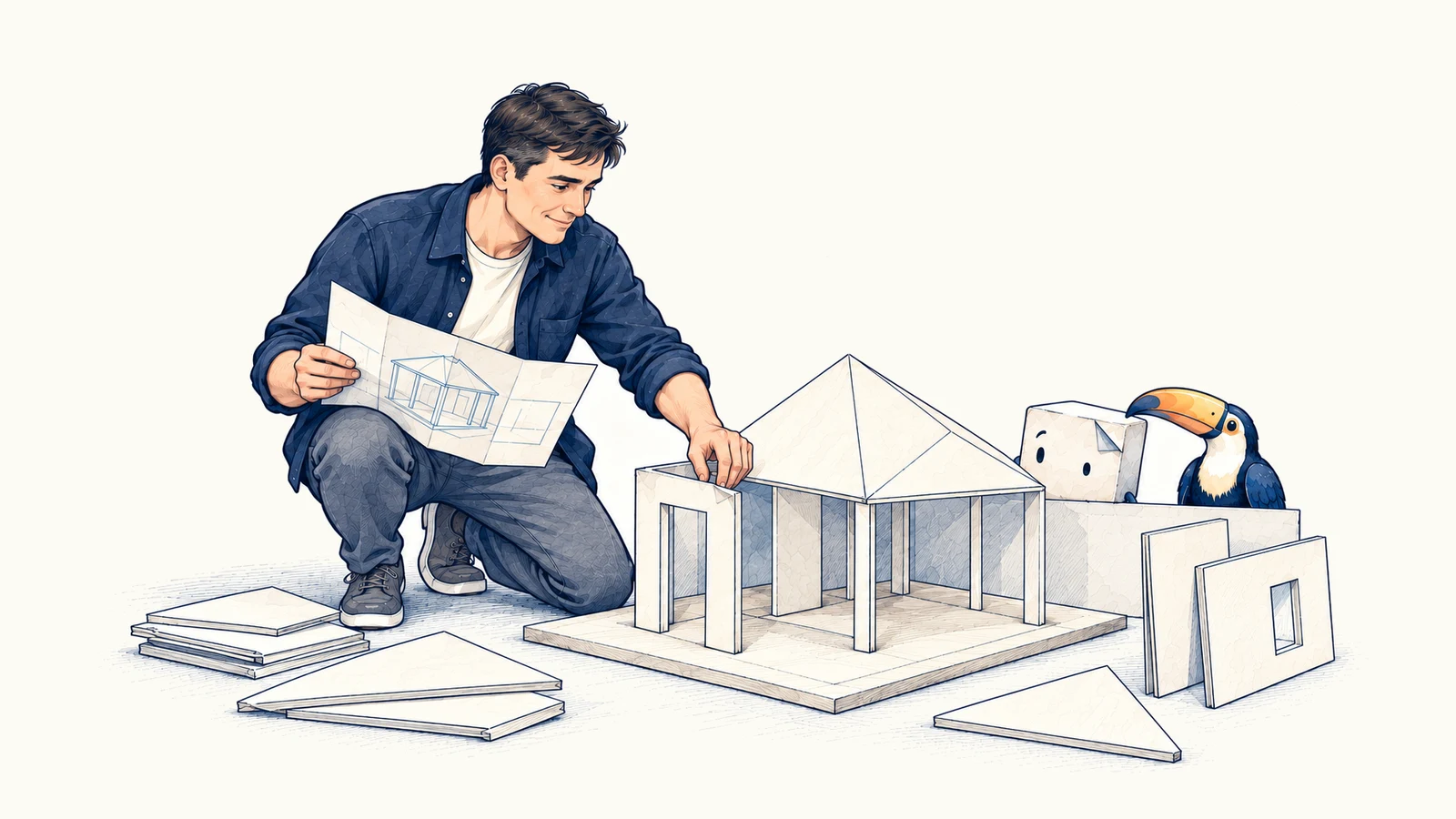
Strong PMs will increasingly work as builders—not because they write every line of production code or replace engineers, designers, data scientists, and researchers, but because they can operate much closer to the work.
They can move from an ambiguous customer problem to a concrete product direction. They can reason through the system behavior. They can prototype enough to clarify the idea. They can work with engineering on architecture and constraints. They can work with data science on signals, models, ranking logic, and evaluation. They can work with design on the customer experience. They can work with analytics on success metrics, guardrails, and experiment interpretation.
They do not just coordinate the work. They shape it.
This is especially true for AI, search, personalization, recommendations, and algorithmic product experiences. In those domains, system behavior is part of the product: data, models, ranking logic, feedback loops, latency, experimentation, and operational controls shape the experience. PMs need enough technical fluency to connect the UI and business objective to the system behavior underneath them.
The future PM needs range, but range alone is not enough. AI can expand what a PM can touch. It can help with prototypes, specs, analysis, research, scenario planning, and communication. But expertise is still what gives the work depth. Strong PMs will use AI to extend their reach while relying on judgment, taste, and technical understanding to decide what actually matters.
The profile I increasingly look for combines strong product sense and real technical depth. This PM understands customers, systems, data, and tradeoffs; works cross-functionally without becoming a meeting router; defines success and designs evaluation loops; interprets imperfect experiments; and helps a small, high-context team move from problem to prototype to production to learning.
This also changes what we should look for when we hire and develop product leaders.
We should ask less: “Can this person manage a roadmap?”
And ask more: “Can this person lead a builder team through ambiguity?”
- Can they identify the real problem?
- Can they reason about how the system should behave?
- Can they create artifacts that accelerate the team?
- Can they challenge weak assumptions?
- Can they understand why a model, algorithm, or product experience is failing?
- Can they connect customer value, technical feasibility, business impact, and measurable outcomes?
- Can they help the team build the right thing faster without lowering the quality bar?

The mini-CEO metaphor has always been incomplete. A better model is a product leader who stays close enough to the details to make cross-functional judgment useful. A strong PM is a builder with judgment.
Someone with enough range to move across disciplines and enough depth to be useful inside the details.