Note
July 11, 2026
2 min read
I Asked to Borrow Their Phones. The Pause Said Everything.
By Cristiano Pierry
As personal AI agents become embedded in daily work, trust, portability, security, and resilience become the real product challenge.
First the Phone. Next, the AI Agent.
This week, my phone was unavailable. Not lost. Not broken. It was tethered to my computer while I used it to develop and evaluate a new algorithm. For long stretches, it was effectively in a committed relationship with my laptop.
That created a practical problem.
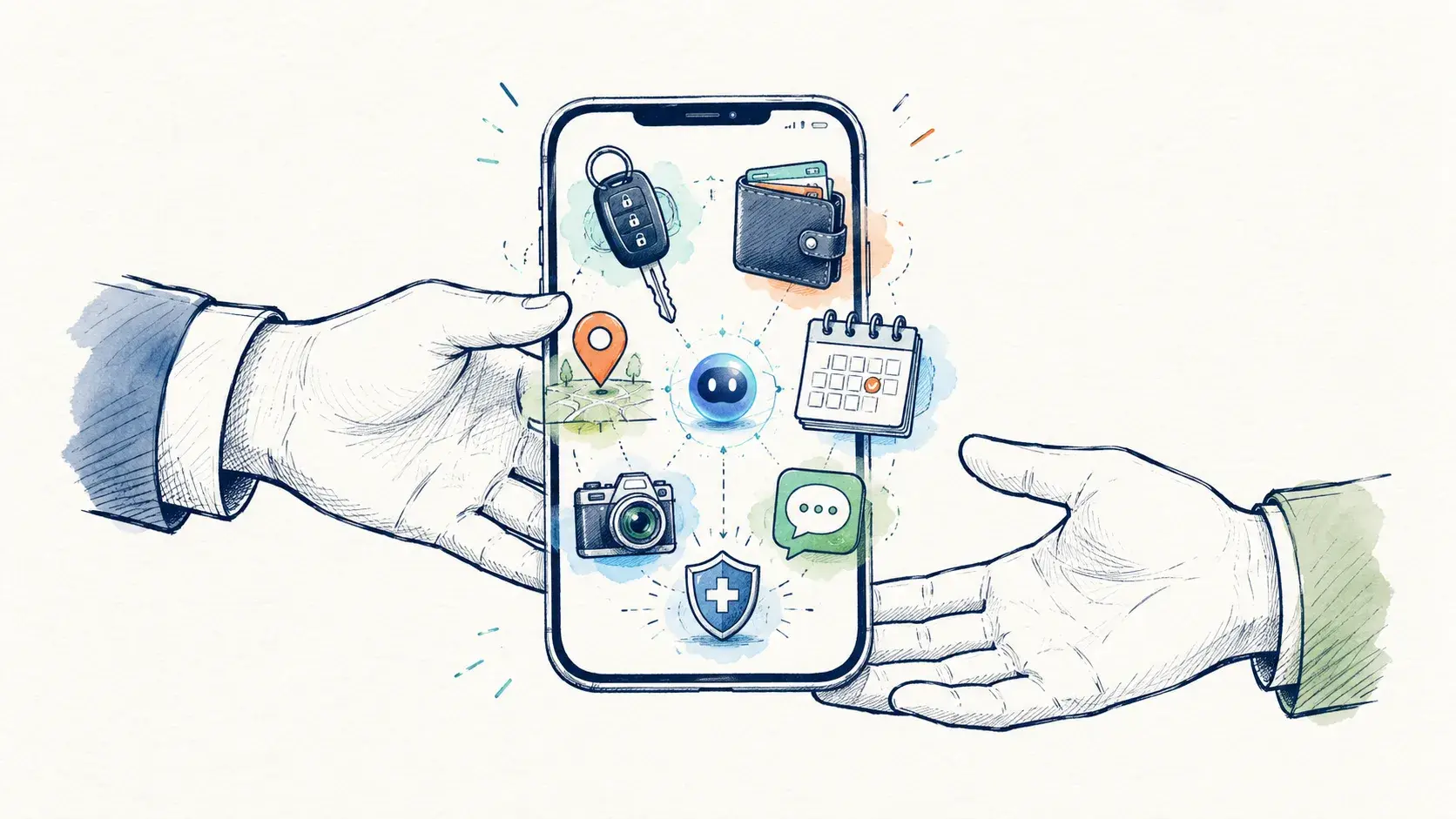
We still call it a phone, which now feels almost quaint. Mine is also the key to my car, my map, camera, wallet, connection to the web, and safety net when I need to reach someone.
So when I headed out with my family, and later drove my older daughter to the airport, I asked my wife and younger daughter whether I could borrow one of their phones.
Neither was particularly eager to part with it.
I am sure they would have agreed if I had pressed. But their first pause was revealing. I was asking to borrow their keys, wallet, camera, calendar, map, communication system, and emergency lifeline all at once.
Technology has a way of entering our lives as a convenience and quietly becoming infrastructure. I have been thinking about that as I spend more time with AI agents.
My own agent, whom I call Bob, has learned quite a bit about how I work. Bob understands my projects, preferences, recurring questions, and some of the context that would otherwise live only in my head. He began as a useful tool, became a collaborator, and is slowly becoming part of my personal operating system.
Today, losing access to my phone feels disorienting. In the not-too-distant future, losing access to a personal AI agent may feel similar.
The technologies that become infrastructure have to earn trust through repetition, not only amaze us on day one.
That changes the product challenge. Capability matters, but so do trust, portability, security, and resilience once people depend on the system. Can the person recover their context? Move it? Inspect it? Keep it protected? Continue when a device or provider is unavailable?
For now, I solved my phone-dependence problem in the most predictable way possible: I bought more technology. A second phone is now dedicated to software development, leaving my primary phone available for everything else, including, occasionally, making calls.
Bob, however, appears to be settling in.
This writing reflects my personal perspectives on product management, AI, and content discovery. It does not represent the official position of my employer or any affiliated organization.