Interaction · Animation · Evaluation
Evaluating the Avatar
A reading journey for watching a companion notice a passage, respond and settle back into the page.
Choose an avatar from the site menu, then scroll slowly. Pause at each passage and give your companion time to find a safe place and respond. The Toucan waits at least 12 seconds after a reaction before considering another one. Try the journey again with another avatar.
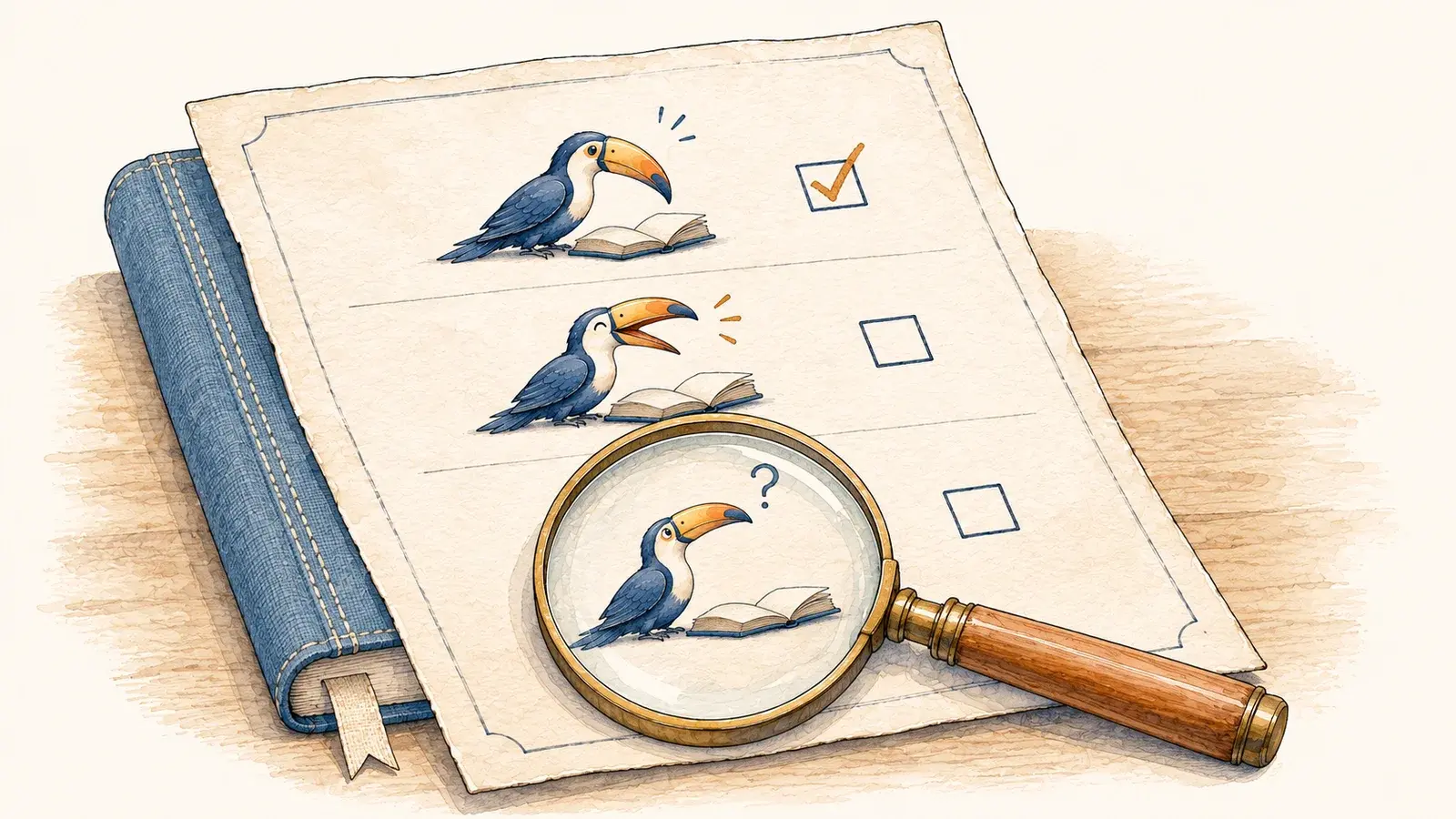
The labels identify the intended reaction, not a guaranteed result. Movement, available space, timing, preferences and prior reactions can affect what happens. Watch for a readable reaction, safe placement and a natural recovery. Reload to begin a fresh visit.
01 · Thoughtful
A companion with a reason to move
A reading companion shares a page with the writing. It can perch, move and react, but those actions are only useful if they leave the reader in control. A character that constantly demands attention can make a lively page harder to read.
The interesting design problem is deciding when the companion has something to add, and when the most helpful thing it can do is stay still.
This page gives that decision a closer look. The passages below carry deliberate cues, and the small labels tell you what each one is meant to invite. They make the intention visible so you can compare it with what the character actually does.
02 · Amused
Attention should have a light touch
A companion can bring humor to a serious reading experience. Timing matters: a small response after a playful line may feel like company, while an exaggerated performance can pull attention away from the sentence that prompted it.
A toucan appointed as a copy editor might have strong opinions about commas, provided the commas can be eaten.
Amusement can be easy to confuse with excitement or surprise when the character is small. Timing and recovery may make that distinction clearer than a larger movement.
03 · Surprised
A cue is an invitation
On this page, each intended reading moment is attached to a particular passage. Once that passage is visible, the companion considers it alongside its current activity and the available space. The words do not automatically tell it how the reader feels.
Imagine opening a familiar book and discovering a small drawing left inside by someone who read it fifty years before you.
That imagined discovery is the surprise in this passage. The companion still needs a safe place nearby before it can react. If there is no suitable position, silence may be the better outcome. The marked passage and its surroundings both shape what is possible.
04 · Puzzled
One passage, different performances
The companions share the same set of reading meanings, but a bird, a sloth and a butterfly move differently. A shared cue gives them a common reason to respond; it does not prescribe identical acting.
How can each character make a moment of puzzlement recognizable while still moving like itself?
Compare the animals at their normal size. Look for differences in posture and timing, and see whether the intended response remains legible without relying entirely on a label or symbol.
05 · Concerned
Keep the writing readable
A reaction takes place in a real layout, alongside headings, paragraphs, images and controls. A safe-looking pose in an animation viewer can become disruptive when it covers a line of text or blocks a button on a narrow screen.
If the companion obscures the passage it is responding to, the reader may have to move the page or dismiss the character to continue.
An attractive pose in isolation is not enough. The character also needs a clear path to a place where the reader can see the reaction and continue reading. That balance becomes harder when the available margins shrink.
06 · Startled
Surprise and alarm are different
Some moments call for surprise; others suggest a sudden interruption. The distinction needs to come through in the acting, especially when a character is small and the performance lasts only a moment.
Imagine a quiet library. A stack of books suddenly slips from a cart and crashes onto the floor beside the reader.
The desired response is a brief startle and recovery, not a prolonged alarm. Compare it with the earlier discovery and see whether the two reactions read differently.
07 · Excited
Make room for delight
A companion does not need to be equally animated at every passage. A brighter, more energetic response can make sense when the writing introduces a possibility worth celebrating, as long as the character still feels connected to the page.
The same passage could invite a flutter, a careful turn or a sudden burst of movement. That opens up an exciting range of ways for the characters to participate.
The same words can be a useful common test while the animal remains individual. At normal size, the action needs to be readable, the body needs to stay coherent, and the character needs a believable way back to rest.
08 · Understanding
What to look for
The labels on this page describe intended responses. They do not establish that every avatar already performs them clearly or that a reaction will play on every visit. Timing, available space, preferences and the character’s current activity can all affect what you see.
The useful test is whether a reader can connect the passage, the character’s response and its recovery without losing their place in the article.
A missed or unclear response is a place to investigate. Repeating the journey with another avatar or screen size can help distinguish a character’s acting from the constraints of the page around it.