Projects
Preparing the portfolio shell before the interactive work loads.
Preparing the portfolio shell before the interactive work loads.
Open-source experiment · AI decisions
What happens when a conventional algorithm and an AI model face the same falling pieces? I built a harness to watch their choices, inspect their mistakes, and understand the cost of each approach.
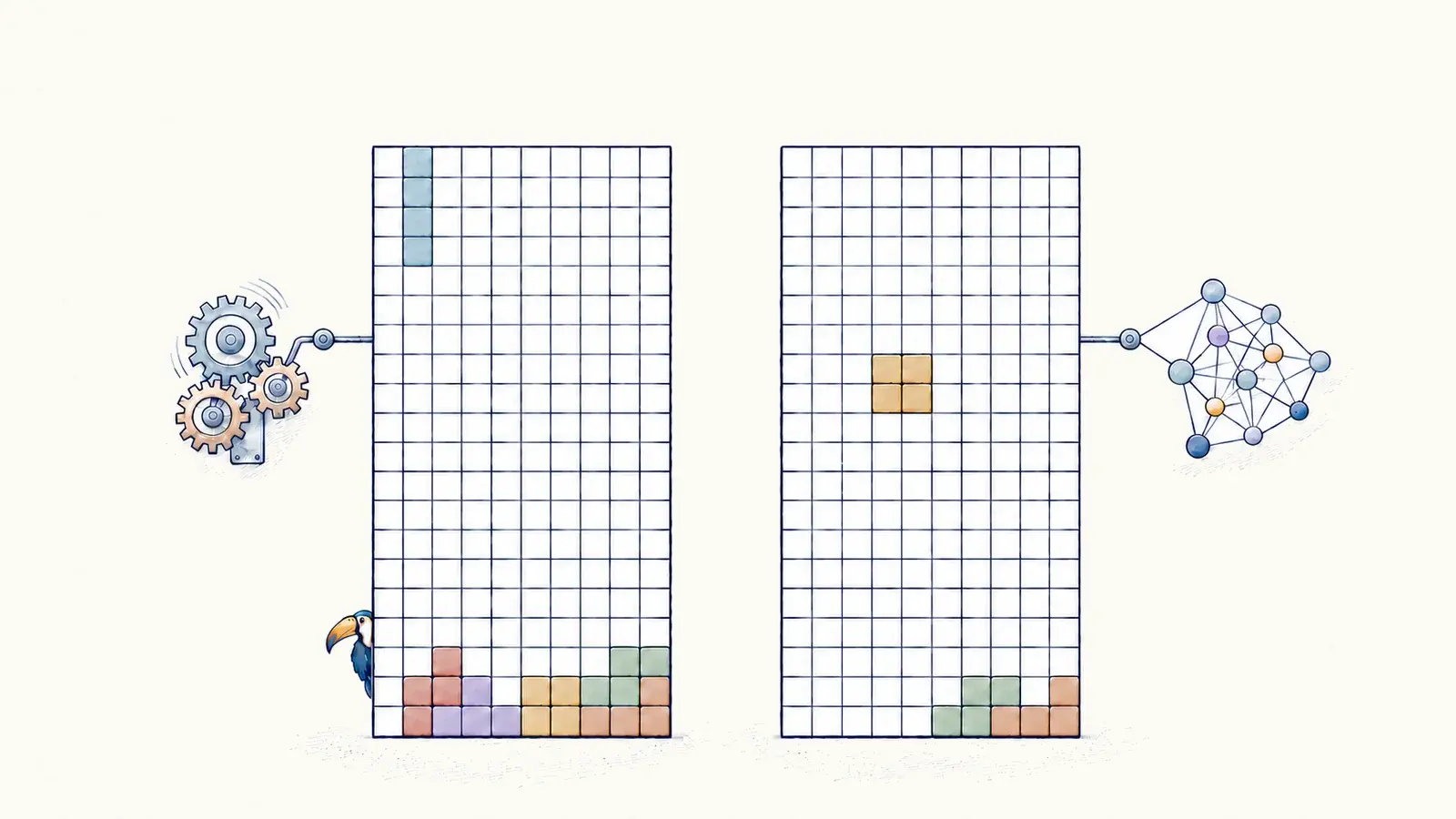
The question
Both players face the same sequence of pieces. OpenAI receives the current piece and the next five; Lookahead can search up to six pieces, with the current piece counting as depth one. Each must choose a legal placement while the game continues. A move that fits now can leave a hole that becomes a problem later.
The harness makes those decisions visible: compare players on the same sequence, inspect the board and retain records for replay. The goal is 300 cleared lines.
Inside a decision
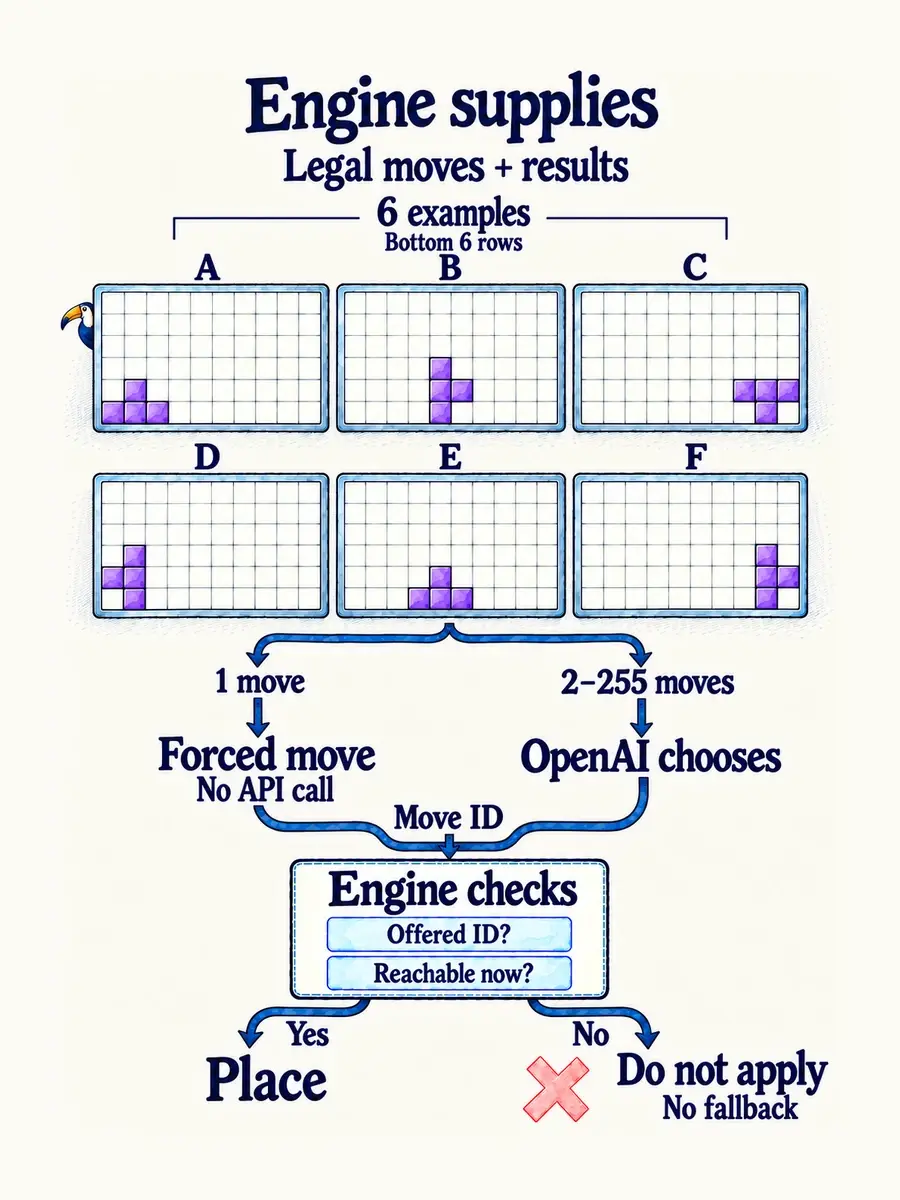
The harness supplies reachable placements and their resulting boards. The model chooses a legal move; a forced move can be handled locally without a paid request. The integration matters as much as the choice itself.
Watch the experiment
In this recorded test, Lookahead depth one and OpenAI Decisions play the same sequence independently. Lookahead cleared 300 lines; OpenAI reached 125 before game over.
What I learned
300 lines
Lookahead depth one completed the objective in the recorded comparison.
125 lines
The Decisions API player reached 125 lines before losing in that same comparison.
~$0.93
Estimated usage cost for the recorded OpenAI game; the local algorithm incurred no API cost.
These are individual development runs, not a claim of performance on unfamiliar games. The article describes the experiments, their limits and the assumptions behind the cost estimate.
The MIT-licensed harness includes the game, local players, the comparison interface and replayable records. Run it locally to play or investigate the decisions yourself.