Article
November 3, 2026
5 min read
We Need a New Operating System
That calls for a new OS designed for people and agents to work together, with responsibility for carrying intention through to a result across applications and devices.
By Cristiano Pierry

I have been working extensively with frontier AI tools and agents, exploring how much further I can take my work, personally and professionally. The experience moves between moments of brilliance and flashes of frustration as the limits of our current software become clear.
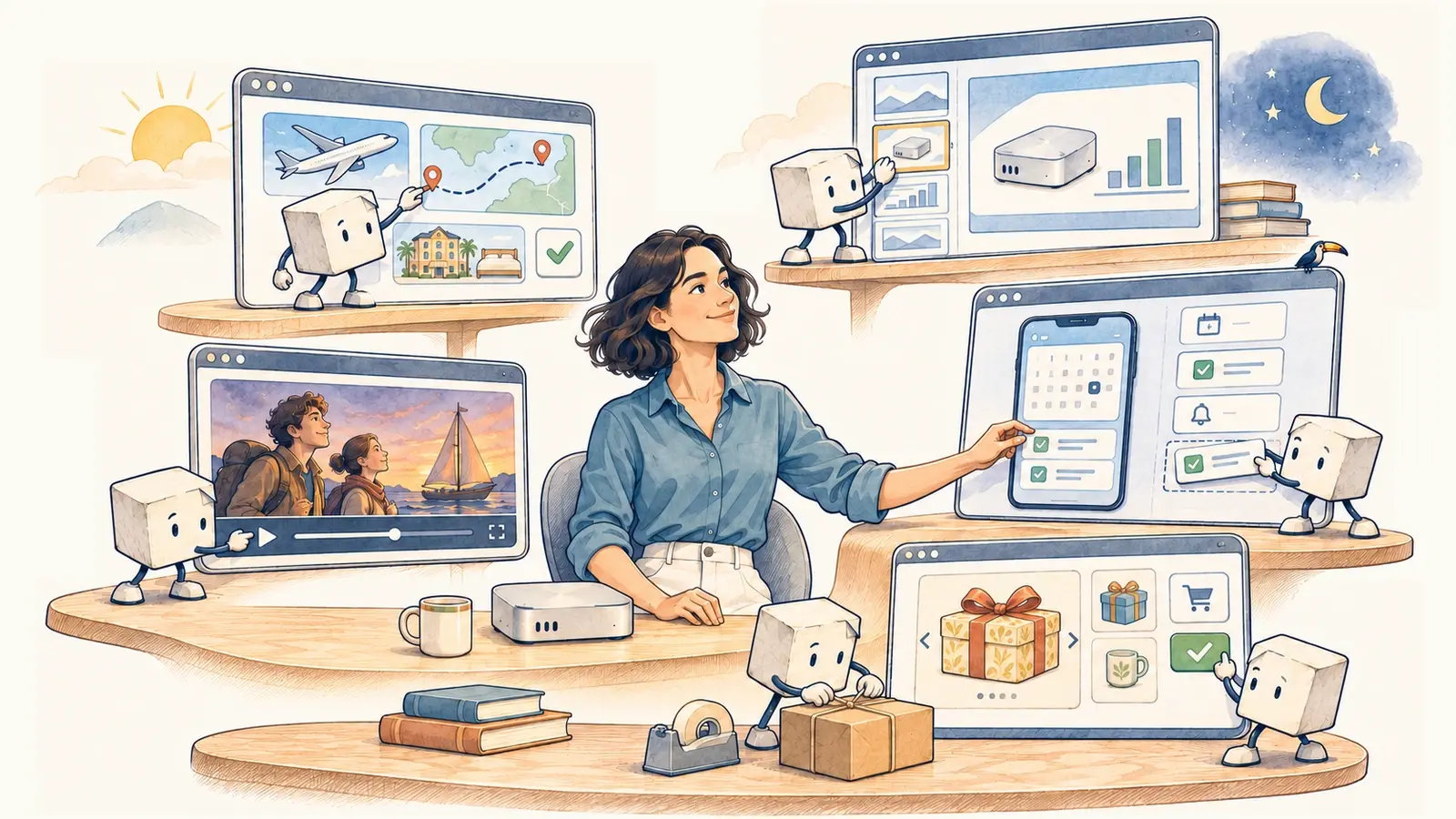
A task can stop because the agent cannot reach an account or use the computer it needs. I keep a headless Mac mini available for my agents, and keeping its access and sessions ready becomes part of my work. Service providers set their own limits, too. X restricts automated use of its website, and Amazon has blocked Meta’s Muse from shopping on its site.
Those frustrations are why I am thinking again about the purpose of the OS. The change has to include applications and service providers, too. Better models alone will not make this way of working coherent.
When we were developing Windows, we were helping more people make the transition from text-based computing to a graphical interface. For many people, being able to see files and applications, point to them, and work through visible controls made a computer more approachable and practical. It was a huge change in what someone needed to learn before they could get useful work done.
Our work was guided by core tenets that expressed what Windows was designed to accomplish. They gave us a shared purpose for evaluating new features and capabilities. If something did not fit, we discarded it. One requirement was to match or exceed Windows 3.1’s performance on a machine with 4 MB of memory. New capabilities had to respect what people could already do with their computers.
The iPhone later helped drive another transition. When Steve Jobs introduced it, he put fingers at the center of the experience. Computing that had been organized around a keyboard, mouse and desk became something we could carry in a pocket and manipulate directly by touch. The shift was about mobility as well as input. It changed when and where computing could be useful in everyday life.
Yet the person still carried much of the same coordination work into that mobile world. We choose applications, navigate their interfaces and move information between them. Much of OS innovation now feels incremental to me. Apple repeatedly promotes new emoji among the features of an OS update. There is meaningful engineering behind modern platforms, but I want us to question the basic arrangement between a person and a computer again.
Agents could make the next transition the biggest yet. We can begin to express what we want accomplished and have software carry out the work. The computer could become a continuing presence across our lives, helping at work, at home and while we move between them. Its usefulness would no longer depend on our sitting in front of a particular device and operating every step ourselves.
That calls for a new OS designed for people and agents to work together, with responsibility for carrying intention through to a result across applications and devices. Apple’s App Intents and Microsoft’s agent connectors are useful groundwork. They are not enough. Connecting agents to existing software does not by itself define what this continuing computing experience should become.
I want the work itself to persist, so the person and agent can both use and change it. If we are developing a plan, I should be able to edit it directly and have the agent continue from my changes. Its assumptions and unresolved work should remain visible when I return. What I start by voice on my commute should be the same work I can inspect and continue at a screen.
The interface needs to support that shared work. The OS should be able to assemble a view with the information and controls the task needs, even when they come from different applications. Voice and visual manipulation should work together. What appears can adapt; the controls for inspecting and changing it should remain predictable. Helping my parents with technology makes me especially unwilling to accept a design that moves the coordination burden somewhere new and calls it simplicity.
For that environment to be useful across a person’s life, its context must extend beyond the current task. It should carry forward the preferences, commitments and constraints I choose to share, and use them to surface relevant information. I should be able to inspect and correct that context, see where it came from, and discard what no longer belongs. What the system remembers should remain a choice I can revisit.
A system with that much context and the ability to act on my behalf needs clear limits. Understanding my goal is not permission to read everything or act everywhere. The person must be able to grant and revoke access, inspect what actually changed, and correct the result. Unfinished work should remain visible. Apps and services will still have to cooperate; a new OS cannot simply ignore their boundaries.
Those limits are part of making the new experience dependable. I would hold this OS to the same discipline we used on Windows: it must match or exceed the experience people have with today’s macOS, iOS and Windows. People should retain responsive, dependable direct use of their applications while agents do delegated work. There is room for different architectures; the ambition should be a coherent experience for the person using it.
I think back to the Windows war room and the transition we were working through. I would love to be a fly on the wall there today, as the team considers how operating systems and applications must evolve for a world of agents. The question of what a computer should do for people feels open again.
We have an opportunity to clean up much of the complexity we created. GUIs made computing more accessible, but we still ask people to learn our interfaces, navigate our applications and sometimes write scripts just to get part of a task done. The responsibility needs to shift. The OS and its agents should do the hard work of understanding what a person wants, asking when something is unclear, and carrying the task through to completion.
I believe our industry will figure this out. Our users will demand it, and they deserve to have the computer work harder so they do not have to.
This writing reflects my personal perspectives on product management, AI, and content discovery. It does not represent the official position of my employer or any affiliated organization.