Article
October 23, 2026
3 min read
We Want Your Business. Please Come Alone.
Customers who delegate to AI assistants still deserve service, with safeguards for authority, automation costs, abuse, and the businesses receiving their requests.
By Cristiano Pierry
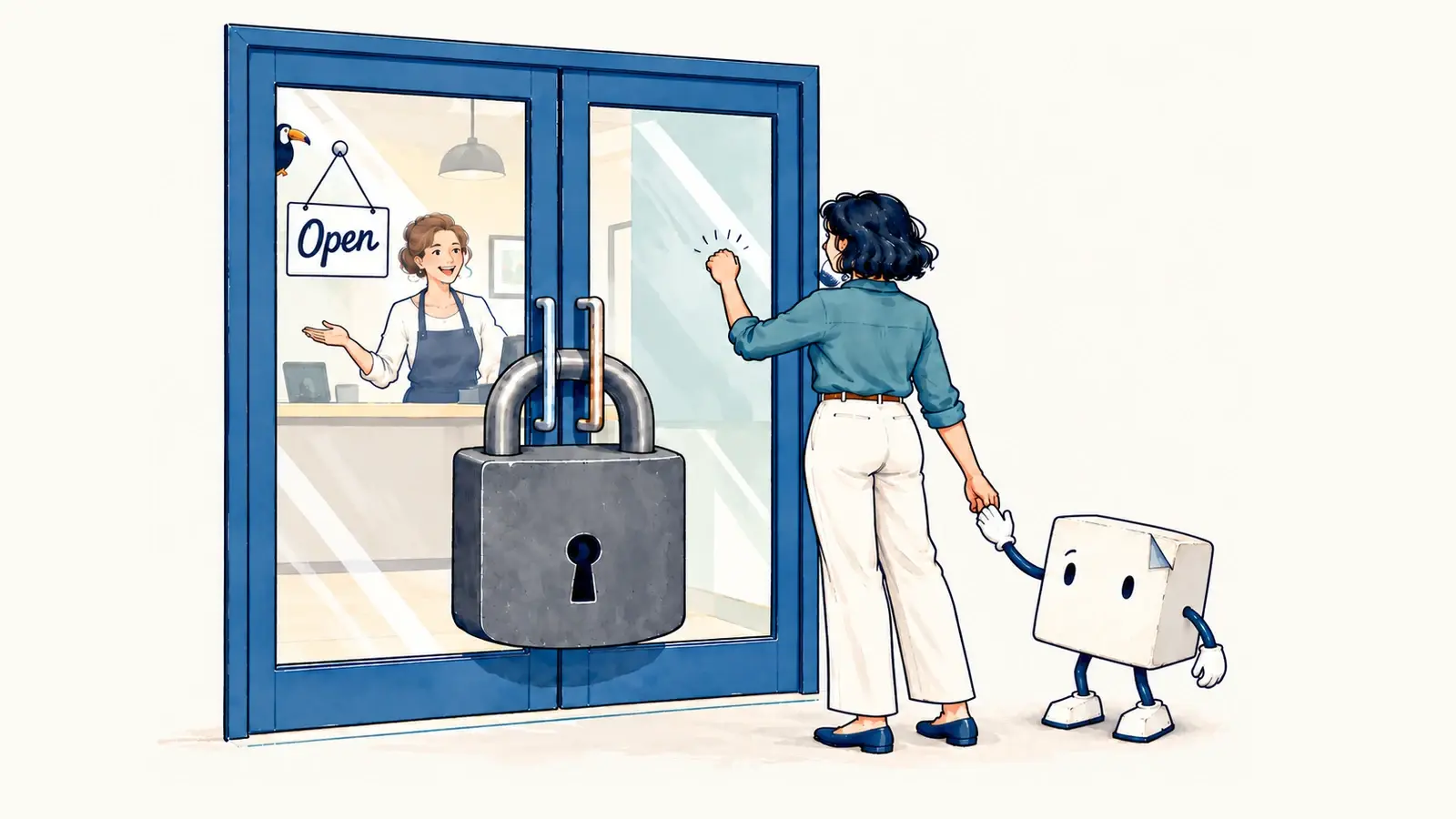
When a customer sends an AI assistant to deal with your website, it is worth asking what they are trying to avoid.
Finding a price should not require dismissing a promotion, declining an upgrade and working out which result is an advertisement. Canceling a subscription should not become a negotiation. We have spent years asking customers to do work that serves the business more than it serves them. Delegating that work is a reasonable response. Even with a good experience, some people will simply prefer to have someone else handle the task.
That is why I am uncomfortable with businesses blocking AI assistants acting on a customer's behalf. Cloudflare offers new ad-supported domains a configurable preset that blocks user-directed agents on pages displaying ads. The customer may still want the product or service. They just want help getting through the experience.
A Wayfair colleague raised a useful complication: making life easier for the person using an agent can make life harder for the service receiving its requests. Serving an automated browser a page full of scripts and visual content still costs money. Agents can also make excessive requests. An ad-supported site may also lose revenue when an assistant retrieves its content without anyone seeing the ads. A more efficient interface could reduce serving costs while leaving the question of how the service gets paid. I think that deserves serious attention, including a more efficient way to serve legitimate requests. A customer comparing prices needs accurate prices and conditions. An assistant carrying out a cancellation needs a reliable way to submit the request and confirm the result.
Blocking agents also becomes more complicated when they can operate the customer's own computer. A website can block traffic from known cloud infrastructure. When an agent controls the browser on a customer's machine, the network address alone is less useful for distinguishing it from the customer. Other signals can still reveal automation. I would rather see businesses invest in serving authorized assistants safely than commit to an escalating game of whack-a-mole over how customers reach them.
Maybe it is time to bring back “the customer is always right,” with enough judgment to keep refusing unsafe or abusive requests. I take it as a reminder to understand what the customer is asking for. If they want to delegate, we should learn why and make that choice work where we reasonably can. We are in business to serve the customer, including the one who would rather send an assistant.
This writing reflects my personal perspectives on product management, AI, and content discovery. It does not represent the official position of my employer or any affiliated organization.