How AI Tools Are Raising the Bar for PMs
What Building Software With My Son Taught Me About the Future of Product Management
Over the past few months, my son Marcelo and I have been coding together. We built a few software projects using frontier AI coding tools: Claude Code, OpenAI Codex, and Cursor. These were not startup ideas. They were learning vehicles. We wanted to understand what happens to product management when the gap between idea and working software collapses.
When early software exploration gets dramatically easier, implementation capacity is less often the first bottleneck. Judgment moves forward: knowing what to build, how to sequence it, when to refine, when to stop, and how to distinguish between a feature and actual user value.
Two Projects, Two Approaches
We chose two deliberately different builds. The first was a personal portfolio site for Marcelo, a place to showcase his projects and work. The second was a web-based 3D Connect-K game that grew far more complete than either of us planned.
For Marcelo, a computer science and information science student, this was a chance to develop product instincts that are hard to build in a classroom. It meant shaping ambiguous ideas into real products, making repeated decisions about experience and priority, and watching those decisions play out in something people could actually use.
For me, it was a way to answer a question that many product leaders are asking: with AI as part of the workflow, what matters more in the PM role? And what matters less?
The PRD Started to Fade
We began the portfolio site the traditional way. We wrote a proper PRD, registered a domain through Squarespace, set up GitHub for source control, chose Netlify for hosting, and picked OpenAI Codex for implementation.
At first the workflow was familiar: define requirements, review output, iterate. But it became clear very quickly that the PRD was not going to stay at the center. It helped us get started, but it did not remain the best instrument for steering the product. Instead, the work became the interaction itself. We stopped refining the PRD and started refining the prompts.
In an AI-native workflow, product clarity still matters enormously, but it shows up differently. It lives in how you frame context, break down tasks, specify constraints, and give feedback in rapid cycles. The work changes to steering an intelligent implementation workflow.
Building Without a Spec
For the game, we changed the process. No full PRD up front. Instead, we started with context: a web app that works on desktop and mobile, a 3D 4x4x4 cube in space, the ability to rotate and zoom, clean piece placement, and an experience that is easy to use. We used Cursor as the orchestration environment and Claude Opus as the coding partner.
From there, the work looked remarkably similar to strong product management at its best. We set context, prioritized, decomposed, and sequenced one capability at a time. First we focused on the world model: could we build a 4x4x4 cube that looked correct, behaved correctly, and gave players enough spatial clarity to interact with it confidently? Once that worked, we added the core game loop: movement, placement, alternating turns, win and draw logic, replay, and undo.
Then the pattern that many PMs will recognize appeared: once the core works, the backlog expands on its own. We added a lobby, then player-versus-computer, then AI difficulty settings. Later we added a layer slider, a layer spread control, and eventually a full 2D view after enough play sessions made it clear that the 3D board by itself might be hard to read.
Each addition was compelling, which is exactly why frontier coding tools are both so powerful and so risky.
The Speed Is a Gift and a Trap
We often used different models for different jobs. We would use Claude or ChatGPT to think through the product problem, clarify the UX, or draft a better prompt. Then we would take that refined prompt into Cursor and execute.
That interaction pattern revealed a broader shift in product development. The classic sequence of research, define, align, hand off, build, review is compressing into something faster: frame context, prompt precisely, inspect, refine, re-prompt, ship.
The PM is still defining the problem, sequencing value, protecting the experience from accidental complexity, and making tradeoffs. In our prototypes, parts of that workflow moved in hours instead of weeks. Good decomposition was rewarded immediately, and weak framing was exposed just as fast.
That speed is exciting and intoxicating, but it also weakens the natural brake that implementation cost once put on scope. Once the game was working, we did what many teams are tempted to do when feature cost drops: we kept going. We expanded board sizes, made win conditions configurable, built AI-versus-AI mode, introduced gravity, and added more customization options.
From a builder's standpoint, it was exhilarating. From a PM standpoint, it was a warning.
When the cost of building goes down, the cost of weak prioritization goes up.
AI does not eliminate the need for discipline. It increases the premium on it.
The New Strategic Constraint: AI Operating Costs
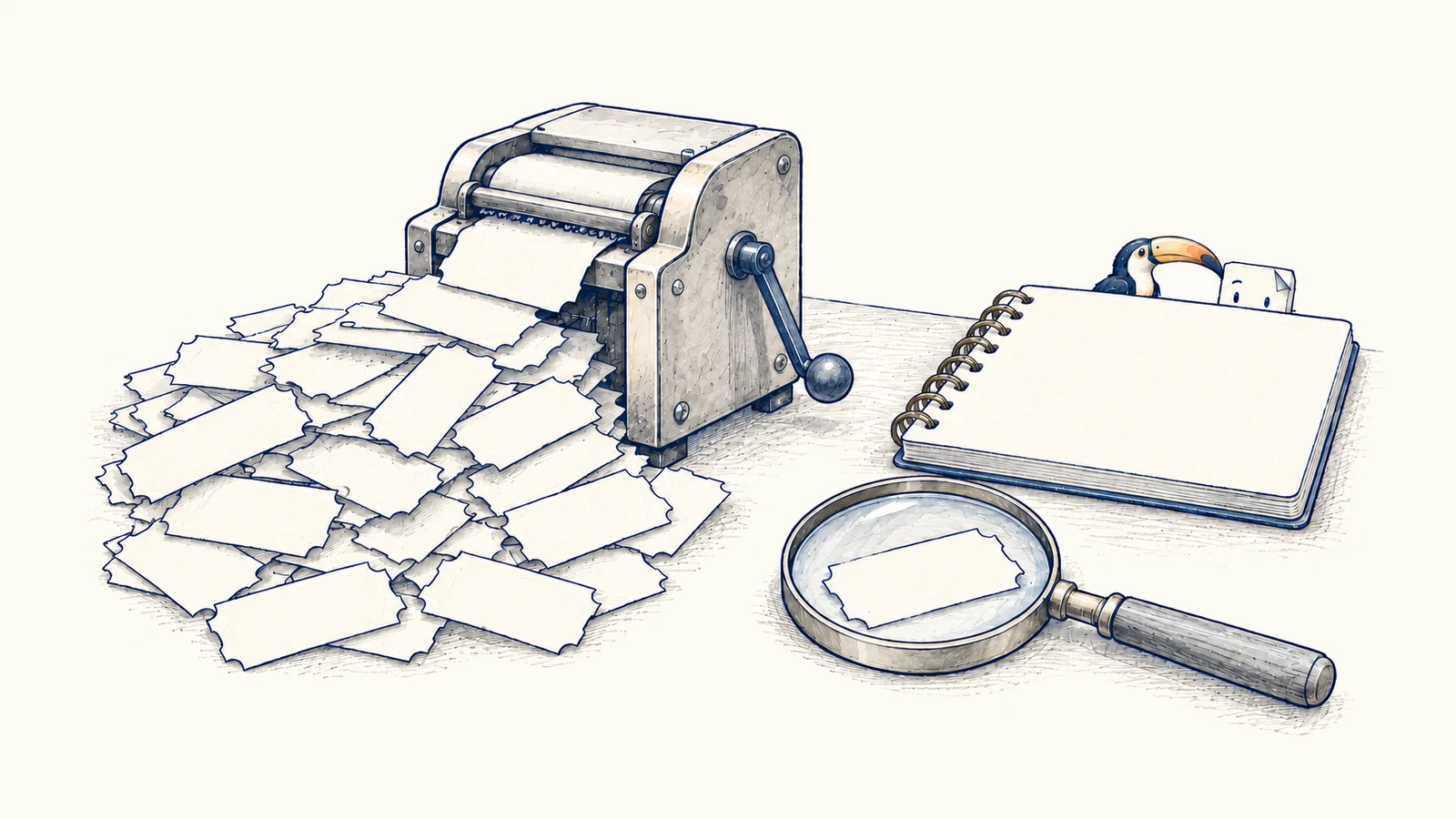
There was another practical lesson we could not ignore: the cost of context. Almost nobody thinks naturally in tokens, and yet frontier coding tools ultimately charge, meter, or constrain usage through token consumption. That makes context management and token consumption one of the hidden mechanics of AI-native building, turning disciplined product thinking into a fundamental lever for operational efficiency.
A few heuristics helped us: treat context like a budget, narrow the task, assume discovery will consume more context than execution, and treat a bloated workflow as a signal that the context or scope needs attention.
Disciplined product thinking improves both product quality and AI operating efficiency.
Playing Each Other From 2,000 Miles Away
The final big feature was online play. Marcelo was in Madison, Wisconsin. I was in Cupertino, California. We had been testing through screen shares and GitHub issues, but we wanted to actually play against each other remotely.
So we built it. We added Firebase for real-time state synchronization, room codes, and in-game messaging. What surprised me was how quickly it happened. We introduced messaging in under an hour.
This speed changes the questions product leaders need to ask during exploration. Buildability and estimated effort still matter, especially in production systems, but PMs also have to decide whether a feature should exist, in what order, for which users, and how they will know it is better.
What Changes for PMs
The biggest takeaway from this experiment is that we made substantial product progress without working line by line through source code. That does not mean technical fluency stops mattering. It means the nature of the work is changing.
A strong PM in this environment still needs systems thinking, user empathy, prioritization, decomposition, and enough technical understanding to reason about architecture and constraints. But the PM also becomes more operational inside the build loop itself. Prompting becomes a real product skill, because good prompts are structured thinking. The PRD becomes more fluid, with living specification moving into the interaction loop. And judgment matters more, not less, because easier implementation raises the need for taste, restraint, and validation.
The practices that consistently helped were starting with context, breaking work into thin slices, choosing tools by job, reviewing aggressively, and never confusing implementation velocity with product progress.
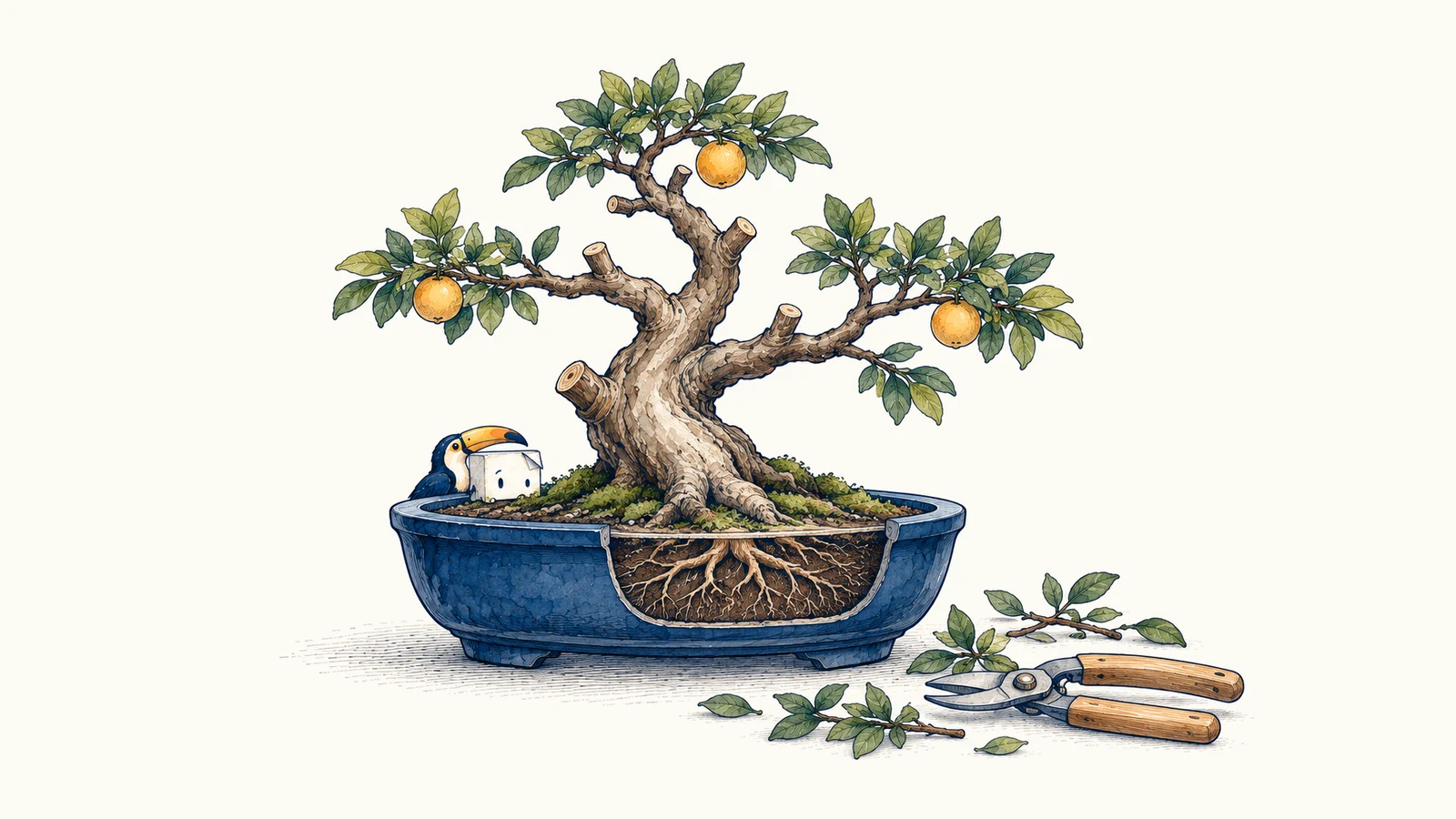
More features is not automatically more value. Faster output is not the same as better judgment.
Why This Matters for the Next Generation
One reason I wanted to write this is that I believe this style of building will matter enormously for early-career product talent. The established signals are not disappearing. Strong internships, communication skills, analytical rigor, and product instincts all still matter. But AI-native building introduces another meaningful signal: can someone take an ambiguous idea, give it structure, work effectively with frontier tools, refine the experience through iteration, and turn that into something real?
That signal is increasingly valuable. Working on these projects with Marcelo reinforced that for me. What stood out was his instinct to keep improving the experience, notice where usability was breaking down, push for clarity, and keep iterating until the product felt right. In an AI-native product environment, generating output is the baseline. The builders who stand out will be able to direct, evaluate, refine, and decide.
What We Built
By the end of the experiment, the web-based 3D game supported player-versus-player, player-versus-computer, AI-versus-AI, online play, configurable boards and win conditions, gravity settings, multiple piece styles, 2D and 3D views, and in-game messaging. It lives at uiralabs.com, Marcelo's idea incubator.
The more durable output was a clearer picture of product management when turning intent into software gets dramatically cheaper.
AI is not making product management less important. It is making strong product management more visible.
The best way for a PM to understand that shift is to build something small with frontier tools. The purpose is not to become an engineer; it is to experience how quickly weak framing, loose priority, and missing review now show up in the artifact.
Marcelo and I built these projects as learning exercises to understand how AI-native development is reshaping the craft of building software, and what it means for the next generation of product builders.