Human Intent Is the Next Operating System
Why frontier tools may finally make technology adapt to people, not the other way around.
A recent tweet by @andrealuizazenha caught my attention because it says something we usually avoid saying out loud: when a society forces a 90-year-old to use a smartphone just to access basic rights, that is not modernization. It is exclusion with better branding.
For decades, we have asked humans to adapt to software.
We asked people to learn each product’s apps, menus, portals, passwords, authentication flows, settings, error messages, and mental models. We moved banking, healthcare, government services, travel, education, entertainment, and everyday transactions into digital interfaces. Then we called it progress.
In many ways, it was progress. But it also came with a cost.
The cost is cognitive load.
Every app has its own logic. The same task can work completely differently depending on the product, the company, the operating system, or the device. A simple action like paying a bill, changing a flight, booking a medical appointment, finding a document, resetting a password, or canceling a subscription can require ten different interaction patterns across ten different services.
And when something fails, the system rarely explains itself in human terms.
The error may be cryptic, the button hidden, the form expired, or the chatbot trapped in a loop. The service assumes the user knows what the system means.
For people who grew up with technology, this is frustrating.
For older generations, it can be disorienting, humiliating, and exclusionary.
This is the part we need to say more clearly. Digital transformation has often transferred labor from institutions to users. We did not always make services simpler. We made people responsible for navigating the complexity themselves.
This is why I see frontier tools as a possible operating layer between human intent and digital services, not only as productivity software.

Not an operating system in the narrow sense of managing files, windows, and devices. An operating system in the broader sense: the primary layer between human intent and digital services.
The current product paradigm is app-centric. The user has to know which app to open, what feature to find, what language to use, what workflow to follow, and what to do when something breaks.
The next paradigm will be intent-centric.
The user should be able to say what they need, show what they mean, ask in their own words, use their own language, and get help completing the task across services.
That sounds simple, but it is a profound shift.
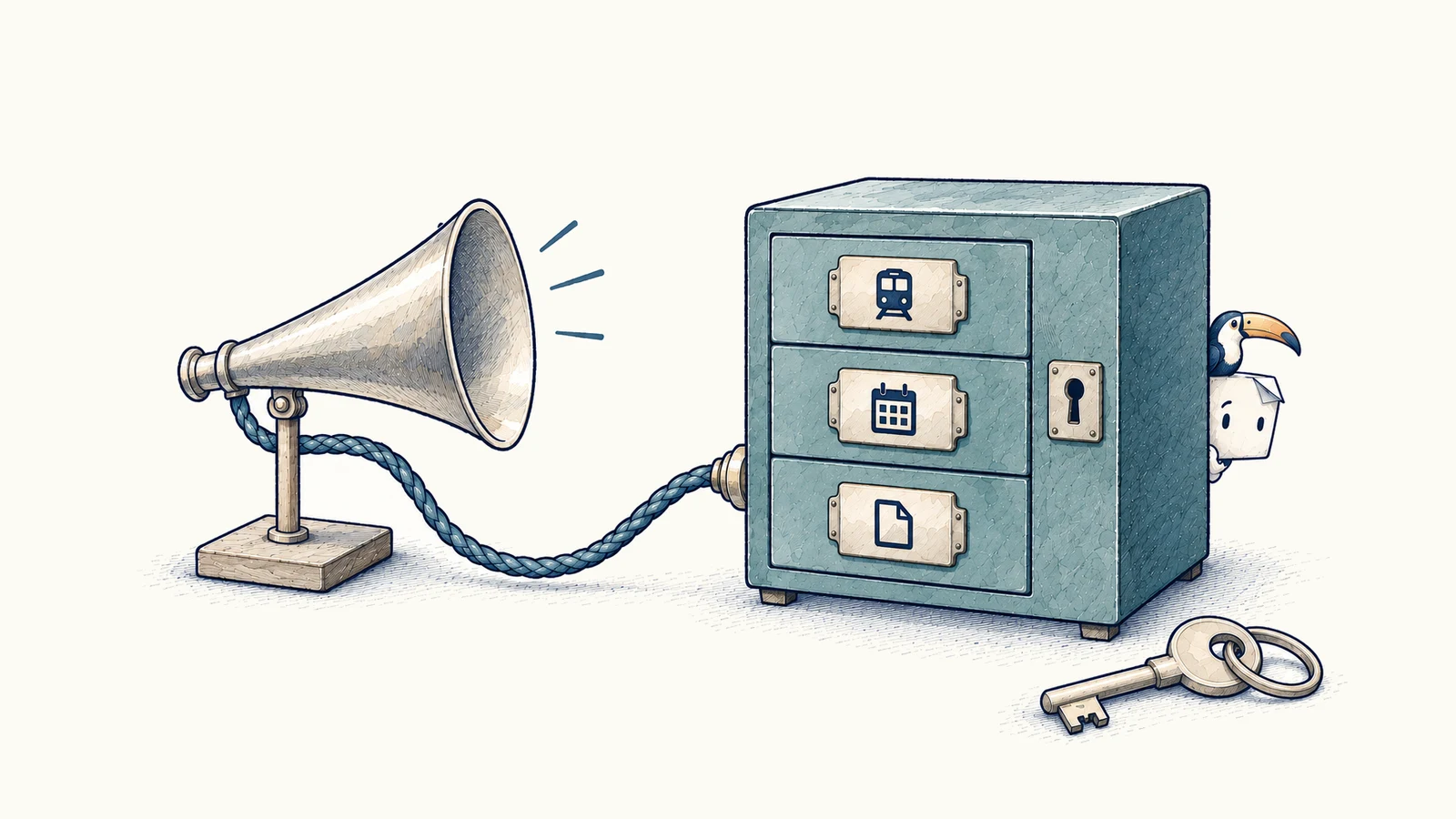
If the model works, frontier tools become an integration layer between people and digital services. They would translate intent into actions, coordinate across systems, present options, explain tradeoffs, ask for confirmation, and complete tasks only with permission.
In entertainment, this means moving beyond search boxes and carousels. A user should be able to say, “Find something my family can watch tonight that is funny, not too long, and appropriate for my parents,” and the system should understand context, preferences, constraints, availability, and mood.
In travel, it means moving beyond fragmented booking flows. A user should be able to say, “I need to visit my daughter next month for three days, keep it under this budget, avoid early morning flights, and make sure the hotel is close to her apartment,” and the system should produce a plan, not a list of disconnected links.
In education, it means the interface should adapt to how someone learns. Sometimes the right answer is a paragraph. Sometimes it is a diagram. Sometimes it is a voice explanation. Sometimes it is a video walkthrough. Sometimes it is an interactive exercise that changes based on confusion.
In healthcare and public services, it means accessibility cannot be an afterthought. A person should be able to say, “I need to schedule my appointment,” or “I do not understand this letter,” or “Help me pay this bill,” and receive clear, patient, step-by-step support in a form they can actually use.
This is where multimodality matters.
The future interface is not just text.
Voice will matter because speaking is often easier than typing, especially for people who are not comfortable with keyboards or complex screens. Images will matter because many problems are visual. A user can show a broken appliance, a confusing bill, a medication label, a remote control, a form, a document, or a screen they do not understand. Video will matter because some tasks require motion, demonstration, and real-time guidance.
The interface will need to morph based on the need.
The response should match the task: perhaps a concise answer, a simple form, a map, a comparison, an audio explanation, a visual walkthrough, or a completed workflow with a clear receipt and an undo path.
This is the evolution LLMs still need to make.
Today, many LLM experiences are still too text-bound. The model receives a prompt and returns a block of language. That is powerful, but it is not enough. The next generation of frontier systems has to reason across modalities, use tools reliably, generate interfaces dynamically, and adapt the experience in real time.
A text-only answer is not the destination. It is a bridge.
The real destination is an adaptive experience layer that understands what the user is trying to accomplish and assembles the right interaction model around that goal.
For product builders, this changes the job.
Product builders should think in terms of outcomes, not only screens. We cannot assume the user knows our information architecture, force every task through a fixed path, or design for the most digitally fluent person and call everyone else an edge case.
The edge cases are the product.
The person who does not know which portal to use. The parent helping a grandparent reset a password. The traveler stuck at an airport. The patient trying to understand a medical bill. The student who needs a concept explained three different ways. The customer who knows what they want but not what words the system expects.
These are not failures of the user. They are failures of the interface.
Of course, this future requires more than a conversational wrapper. A friendly prompt box sitting on top of broken systems will not solve the problem. Frontier tools need deep integration, reliable tool use, permissioning, identity, memory, privacy, auditability, safety, and escalation paths when automation is not appropriate.
A wrong answer with confidence is not an operating system.
A system that completes a transaction without clear consent is not progress.
A model that cannot explain what it did, why it did it, or how to correct it is not ready for high-trust workflows.
The next operating system has to earn trust. It has to be transparent when it is uncertain. It has to know when to ask a question. It has to know when to hand off to a human. It has to protect users from fraud, confusion, and accidental harm. And it has to be designed for people with different levels of digital fluency, not just for power users.
For decades, software made humans learn the language of machines. Frontier tools can help machines work with the language of human intent.
The measure of that operating layer will not be how fluent the assistant sounds. It will be whether services become less fragmented and intimidating while preserving consent, explanation, and human escalation.
For people already fluent in digital systems, that may feel like convenience. For those whom today’s interfaces exclude, it can mean dignity and access. Technology should translate complexity and help people feel more capable, not decide who gets to participate in modern life.