Note
June 23, 2026
2 min read
A Demo Is Not Evidence
By Cristiano Pierry
A demo makes a product question visible. Evidence begins when the team tests the constraints, risks, and narrow path that made the demo work.
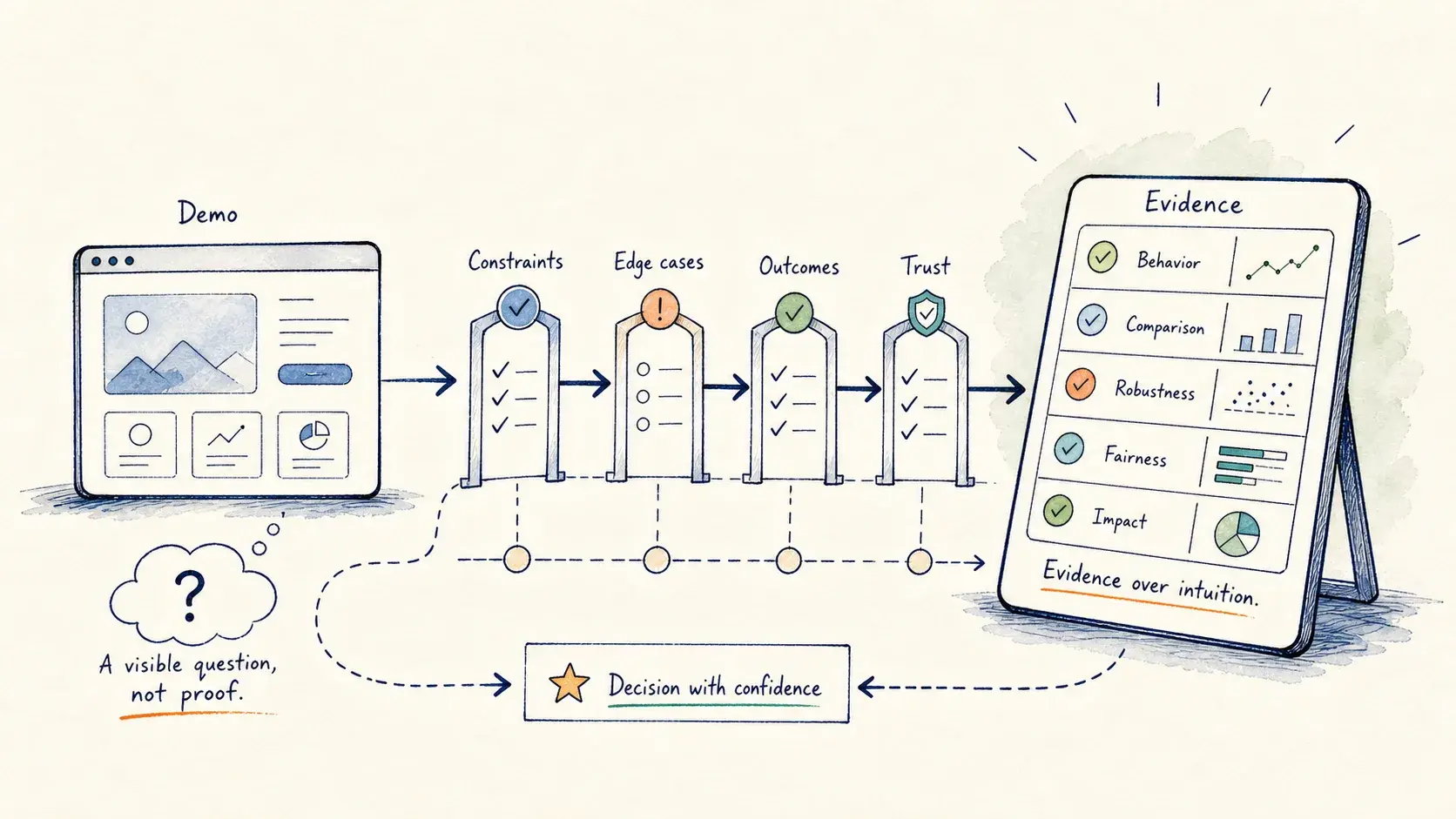
A demo is useful because it makes an idea visible. That visibility is also what makes it dangerous. Once something moves on screen, the interface gives the idea weight, the workflow feels intentional, and a coherent generated answer can make the product seem further along than it is.
A demo is a question made visible, not evidence that the question has been answered.
Building with AI has made me more careful about that distinction. These tools make it easier to create a convincing first artifact, which lets product teams test language and pressure-test a workflow earlier. The artifact becomes evidence only after the team asks what the polished path has not shown:
- Can it handle real constraints and edge cases?
- Can we evaluate the output consistently?
- What privacy, source, or trust questions remain?
- Does the demo work because we carefully chose a narrow path?
The right next step may be an evaluation plan, a privacy review, a source check, or a sharper definition of the user problem. Sometimes it is a roadmap commitment. The demo has not earned that conclusion merely by looking complete.
The best demos create the conditions for evidence to be gathered.
This writing reflects my personal perspectives on product management, AI, and content discovery. It does not represent the official position of my employer or any affiliated organization.