Note
August 25, 2026
2 min read
An Archive Is a Retrieval Product
By Cristiano Pierry
Keeping old work is easy. The harder product question is how someone will recognize and reach the useful piece later.
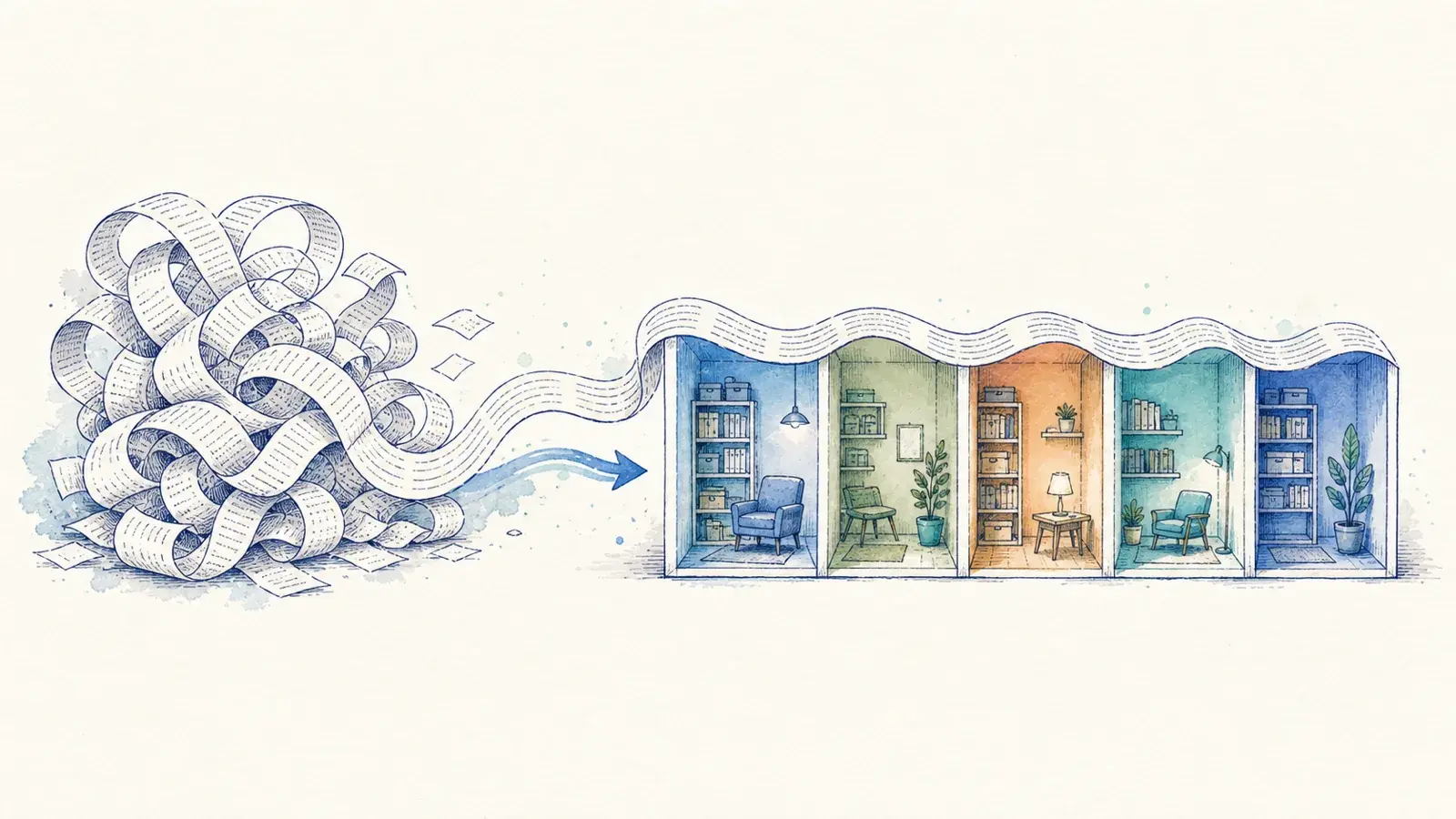
I spent part of this week working on archive pages. Nothing was missing. The articles and posts still had dates, titles, and working links. The problem was that keeping the work and making it available had started to become two different things.
One long stream had been enough when the collection was small. I could remember roughly when something was published and scroll until a title looked familiar. As the history grew, that approach asked the reader to supply both the memory and the patience.
The questions were ordinary product questions. Should the main page load the entire history or lead into smaller monthly pages? What should appear in a preview? Can someone recognize an older idea without opening every article? How much of the archive should load before the page becomes useful?
Those decisions now shape the writing archive on my site. The main surface stays compact. Monthly pages provide a narrower place to browse. Titles, dates, excerpts, and images help someone recognize a piece, while lighter all-content lists provide another route through the complete collection.
Search solves a different problem. It helps when someone already knows what to ask for. An archive also has to support recognition: seeing an older title or description and realizing that it is the thing you needed.
AI makes the problem more noticeable because it increases the amount of material I can produce and preserve. More notes and experiments do not become more useful merely because they remain on disk. If the path back depends on remembering that the right idea appeared in a particular month, the archive is storing more than it is returning.
The practical test I am using is simple: can someone enter through the current page, recognize a useful older piece, and reach it without loading or scanning the entire history first?
This writing reflects my personal perspectives on product management, AI, and content discovery. It does not represent the official position of my employer or any affiliated organization.