Note
July 12, 2026
2 min read
The Next Generation Won’t Have to Unlearn Software
By Cristiano Pierry
AI-native engineering means assigning ambiguous reasoning to models while preserving the rigor that makes software systems reliable, observable, secure, and trustworthy.
I had a humbling reminder tonight about what it really means to work AI-forward.
I spent nearly 40 hours developing an OCR pipeline to identify titles from screenshots: trying multiple extraction methods, adding cleanup rules, building candidate catalogs, tuning confidence thresholds, and creating a human-review step. Then I realized I had been optimizing the wrong layer.
I should have asked, from the beginning, “Can a multimodal LLM interpret the image directly?”
I had assigned the work incorrectly. The model should handle the ambiguous visual reasoning, while the surrounding system constrains what the model does.
The engineering work was not wasted. In my setup, the traditional pipeline resolves about 80% of cases with no per-image model cost, then routes the uncertain 20% to the LLM. The combined system now identifies the correct title ~100% of the time on the current evaluation set, while keeping inference costs under control. For this task, I am also replacing my own human-in-the-loop review step with an AI LLM evaluator.
This experience made me wonder whether the next generation of engineers will have an advantage because they will begin with AI-native instincts rather than having to unlearn decades of implementation patterns. At the same time, experienced engineers bring the rigor these systems still need: testing, reliability, security, observability, and healthy skepticism.
The opportunity is to combine both.
Keep the hard-earned engineering judgment, but question the inherited path.
Before optimizing an existing step, ask whether that step still needs to exist.
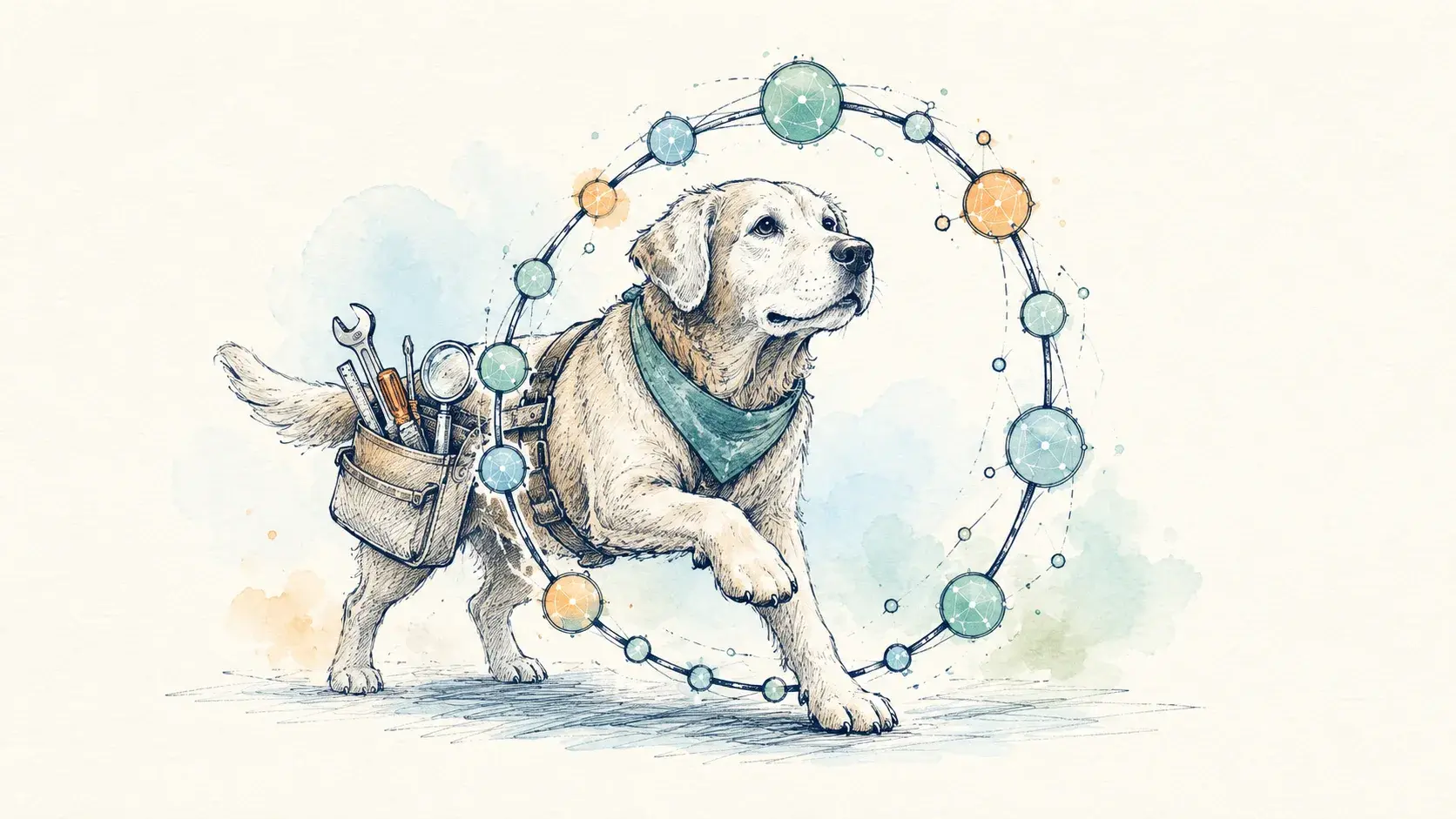
Maybe we can teach an old dog a new trick after all.
This writing reflects my personal perspectives on product management, AI, and content discovery. It does not represent the official position of my employer or any affiliated organization.