Note
July 23, 2026
3 min read
When One Second Was Too Long
By Cristiano Pierry
Search trained us to expect instant results. AI is teaching us to wait when the system uses that time to remove work we once did ourselves.
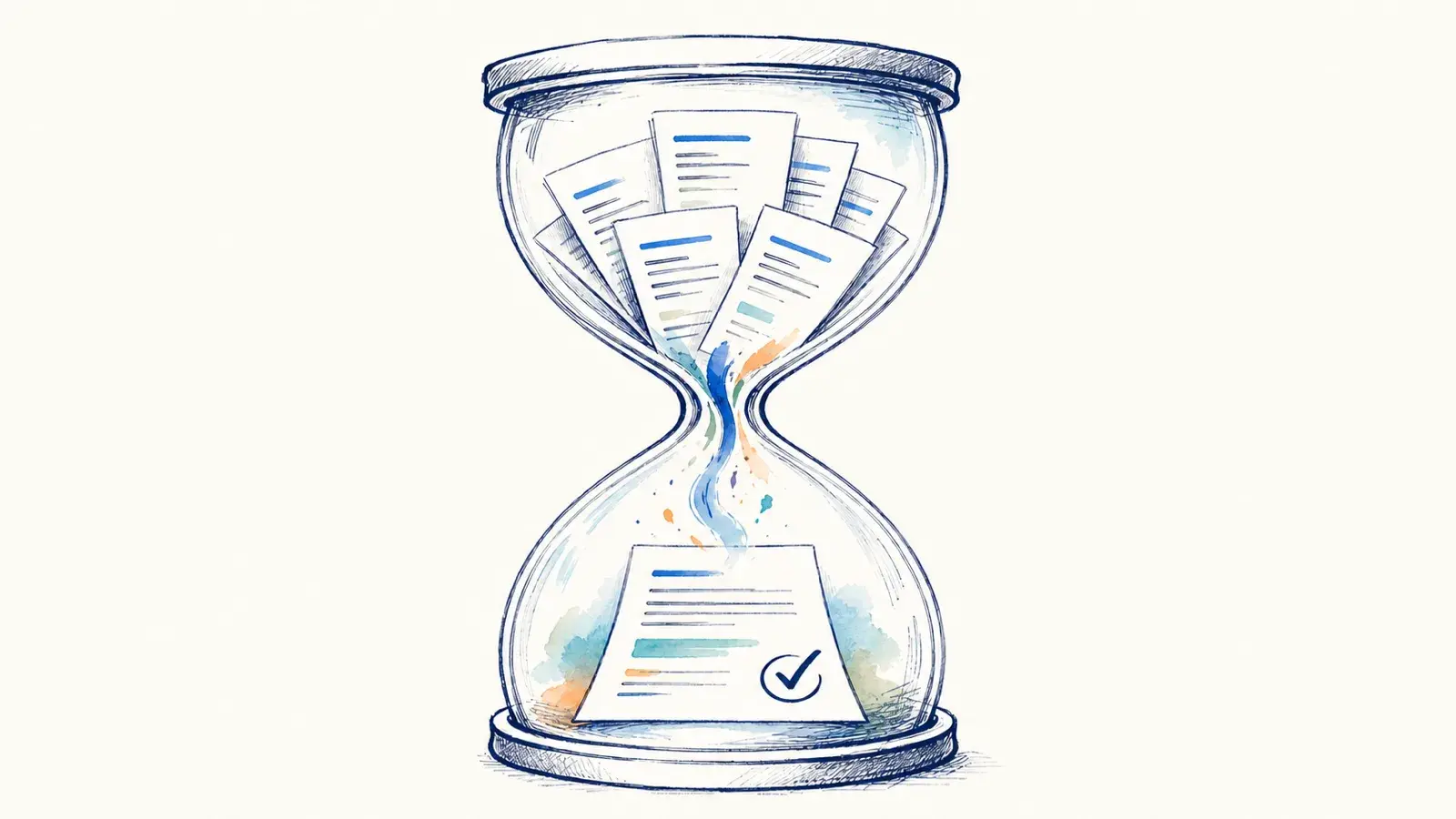
When I worked on Yahoo Search, the time between entering a query and seeing the SERP, the search engine results page, was sacred.
In the early 2000s, getting that response below one second mattered enormously. We were searching an index containing billions of documents, which sounds almost quaint now but was a serious engineering challenge at the time. Every fraction mattered. We had one job before the user started theirs: put the ten blue links on the screen in under a second.
In search, milliseconds were a budget, and we spent them carefully. Google helped establish the same expectation. Speed became the admission price for search.
The metric expressed a product truth. A search engine returned a set of promising places to look. The user still had to open the links, decide which sources were credible, read them, compare what they said, and reach a conclusion. The SERP started the work and had very little permission to be slow.
Search pages became richer over time. Google called one important step Universal Search: news, images, video, maps, and books began appearing alongside web pages. Then came weather answers, Knowledge Panels, and Featured Snippets. The industry usually groups these under “SERP features.”
The ten blue links got better roommates, but they still owned most of the building. Search would get you to the right information very quickly. You would do the remaining synthesis.
ChatGPT and Claude changed what we were willing to wait for. I can now enter a question and watch an AI system work for several seconds. For a more involved task, I may wait minutes. Reasoning models make the tradeoff explicit by spending more time and compute on harder questions.
Twenty years ago, a blank SERP for that long would have looked like an outage. Today, I watch the timer knowing the system is reading and reasoning before it answers. For once, the wait has a job.
What comes back can be a researched and argued response organized around the question we actually asked. The system can inspect the sources and make sense of their disagreements. When it works, the machine absorbs the work we once did across a collection of browser tabs.
Latency still matters. Five seconds is absurd for a navigational query. A two-minute answer filled with polished nonsense feels like being put on hold by someone who returns with great confidence and the wrong department. The wait earns its place when the task deserves it, the product makes progress legible, and the result earns our confidence.
For many AI experiences, the more useful measure is time to a useful conclusion: how long it takes before a person has something trustworthy enough to act on. Query-to-response time remains essential for simple tasks. Deeper work needs a longer clock, one that runs until the result becomes useful.
I would never accept a SERP that takes two minutes to appear. I will gladly wait two minutes for a system that can read those results with me.
Same impatience. We moved the finish line.
This writing reflects my personal perspectives on product management, AI, and content discovery. It does not represent the official position of my employer or any affiliated organization.