Illustration · Character animation · Work in progress
Remaking the Avatar
A convincing painting was only the beginning. The harder task was keeping the same bird alive from one drawing to the next.
Explore the working collection ↓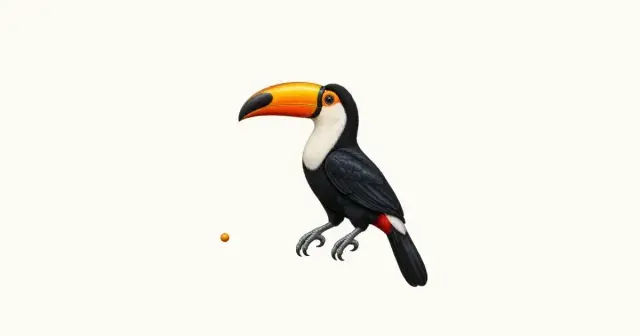
Why start again?
I wanted a detailed toucan with natural species colors and the full range of movements, care and reactions already defined for the website. Flight was the clearest warning: exported frames could be numerous while the wings still looked wrong.
The reset moved toward a leaner character and complete rough poses before detailed painting. The drawings and paintings in this study were produced with AI image generation. A feeding pilot tested the painted direction. The larger sketch collection then made the repertoire visible enough to compare, question and correct.
The original project remains part of this history. Creating the Avatar documents the earlier painted system and its workshop.
The working collection
See the drawings and the decisions.
Explore 150 retained sequences and 4025 images, including sketches, painted candidates, references and earlier attempts. The sequence count includes alternate versions; sequences can reuse drawings. Gallery tiles show retained source drawings. Where available, the sequence player opens the current homepage cutouts and lets you compare the originals.
Visit the homepage and choose “Toucan sketches” in the avatar picker.
The space between actions.
A standing pose, a turn and a preen can each look plausible in isolation while disagreeing about body volume, tail length or where a foot is planted. The same problem appears in markings: the white rump and red undertail must follow the bird through a turn, including the moments when one is hidden.
Each rough sequence records the order of its whole-bird drawings and how long each remains on screen, including deliberate holds. Review also follows the transitions between actions, including foot contact and recovery. Initial pose studies and animation candidates are labelled separately in the gallery.
The number of attempts is part of the record. More drawings do not establish an efficient process or correct movement. Drafts, superseded studies and rejected experiments remain available so the selected path can be compared with what came before.
What still needs proving.
The remaining work is to carry the painted character through the full repertoire, then verify contact, transitions, interruptions and reduced-motion behavior in the website and Aviary. The replacement is still unfinished.