Article
September 10, 2026
7 min read
Roadmaps Should Have Expiration Dates
Roadmaps should coordinate today's choices without granting permanent authority to the assumptions that produced them.
By Cristiano Pierry
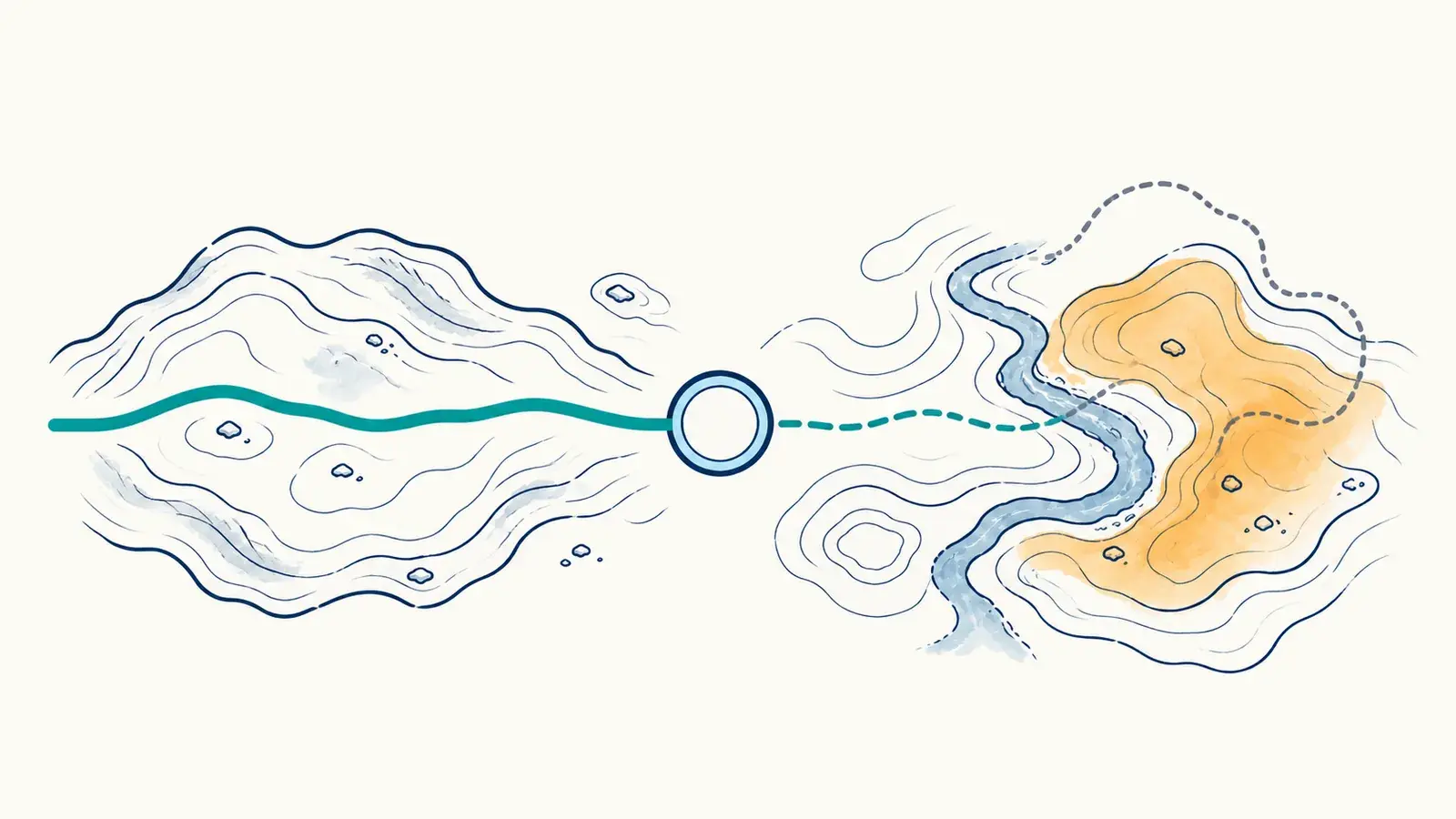
A roadmap can tell you exactly when a team expects to deliver something and still omit the date that matters to the reasoning behind it.
The target quarter is visible. The owner, dependency, and status may be visible too. What the artifact may not say is when the customer evidence, technical estimate, or proposed solution needs to be reviewed again. Delivery has a date. The assumptions supporting the delivery can remain undated.
That difference matters because a roadmap is a decision made from current evidence. It reflects what the team knows about the customer, what it believes the product can do, which constraints appear fixed, and how much confidence it has in the proposed route. The dates do not freeze any of those inputs.
I think each material roadmap bet needs a review horizon. The phrase “expiration date” is useful in the title because it makes the discomfort clear, but expiration should not mean automatic cancellation. The review horizon governs the continued authority of the bet's reasoning. After that point, the current rationale cannot renew itself through silence.
This is different from putting an end date on an active product intervention. A temporary promotion, exception, or manual override needs an expiration so its effect does not persist unnoticed. A roadmap may describe work that has not started. Its review horizon answers a different question: how long should the existing evidence keep this bet in its current position?
The dates and the reasoning age differently
A plan can become stale after a dramatic event. A competitor moves, a dependency fails, or a new legal constraint appears. It can also age quietly. Research clarifies the customer problem. A prototype makes an interaction look weaker than it did on paper. Engineering discovers that a small feature depends on a large platform change. Early usage challenges the metric the team chose to represent success.
The underlying objective may remain valid through all of this. The proposed way of reaching it may not.
Different parts of the same roadmap also carry different levels of certainty. The team may treat a privacy requirement as non-negotiable and a contractual promise as a hard constraint. Its belief that a particular interface will solve the customer problem is more provisional. A fixed launch window does not make the feature chosen for that window equally fixed.
A conventional roadmap can flatten those differences into the same visual language. Every item receives a position and a date. Once staffing and stakeholder expectations organize around a line item, movement can start to look like failure. Protecting the roadmap can become easier to explain than updating it, even when the new evidence deserves attention.
Building 3D Connect-K with my son Marcelo gave me a small illustration of the problem. It was a learning build, not a formal organizational roadmap. We began with a specific 4x4x4 game brief. Once the game worked, its behavior exposed a legibility problem and eventually led us to add a full 2D view. The relevance here is narrow: working behavior invalidated part of a specific plan without invalidating the product we were trying to make.
Roadmap changes can come from the same kind of contact with reality. A technical investigation may change the expected effort. Customer evidence may challenge the mechanism. A working product may reveal that the chosen route creates a problem the original document could not show. None of this makes planning useless. It is why the plan needs a deliberate way to absorb learning.
Dates still matter. Other teams need to prepare. Engineering dependencies need sequencing. Leaders need to know where investment is going. Customers may have received an explicit commitment. A roadmap becomes more trustworthy when people can distinguish those commitments from the bets around them and know when the team will examine each bet again.
A review horizon forces a decision
I would add a valid through or review by field to every material roadmap bet. At that horizon, the owner has to decide whether the reasoning still holds.
The team may renew the bet exactly as written. It may change the scope or sequence. It may retire the work because another solution now looks stronger or the evidence no longer supports the investment. The work does not disappear when the date arrives. The date creates a mandatory return to the decision.
For a meaningful bet, I would want the roadmap entry to show:
- the customer or business outcome the work is meant to change
- the evidence and assumptions supporting the current direction
- the constraints and commitments the team must preserve
- the review horizon for the reasoning
- the evidence that would justify an earlier review
These fields should be concrete enough to change the next conversation. Preserve the launch date and privacy boundary identifies real constraints. Revisit if research shows that abandonment is driven by trust rather than setup effort names evidence that would challenge the proposed mechanism. A trigger such as if priorities change merely restates the uncertainty the review horizon is meant to manage.
The right horizon depends on the learning clock and the consequences of being wrong. A reversible experiment with rapid customer feedback may deserve an early review. A foundational platform investment may take longer to produce meaningful evidence. A regulated or high-blast-radius change needs a more demanding evidence and review bar, even when the decision itself must be made quickly.
A shorter horizon is not automatically more honest. If the team cannot obtain meaningful evidence during the interval, frequent reviews will only recycle opinion. The horizon should fall late enough for the relevant signal to arrive and early enough to reconsider the bet before staffing, dependencies, and implementation make change unnecessarily expensive. One team may review after a prototype. Another may need a technical investigation, a round of customer research, or initial product behavior.
Early-review conditions can also protect the roadmap from reactive churn. One complaint, one executive screenshot, or one weak week in a noisy metric should not automatically reorder a portfolio. It may trigger diagnosis, reveal an instrumentation problem, or surface a segment worth investigating. The team still has to decide what quality of evidence is strong enough to reopen the bet.
Consider a hypothetical roadmap item to redesign onboarding. The current plan assumes that people abandon the flow because it asks for too much information before showing value. The team intends to reduce setup and move the first useful result earlier.
Halfway through the work, research suggests that people understand the setup but do not trust what the product will do with their information. The desired outcome has not changed, but the evidence points to a different mechanism. Removing fields may do little if the actual problem is confidence.
A roadmap treated as a permanent contract can encourage the team to finish the planned redesign and explain the miss afterward. A review horizon gives the team a legitimate moment to ask whether the work still represents the best available answer. In this case, the outcome remains stable while the route changes.
Organizations cannot coordinate if every plan is provisional in practice. A product manager who changes direction whenever new information arrives transfers uncertainty to everyone around the work. The review horizon therefore needs a decision record, not only a date.
When a bet enters the roadmap, preserve the question being answered, the evidence available, the tradeoff accepted, the owner, and the reason for the review horizon. When the plan changes, preserve what the team believed before and what it learned afterward. The record lets a later reviewer distinguish new evidence from an untested assumption or an unexplained change of direction.
The horizon does not need to create another standing meeting. An existing planning or product review can compare the original assumptions with the new evidence and record whether the owner is renewing, revising, or retiring the bet. The value comes from forcing a decision about the reasoning, not from adding a calendar reminder.
Accountability does not require the original answer to survive. It requires the reasoning, the evidence, and the change to remain inspectable.
Contractual promises, safety obligations, and coordinated external launches remain constraints. The proposed implementation can reach its review horizon without making the obligation optional.
Sometimes the review will confirm the existing plan. Difficult work needs enough time to produce evidence, and stability has real value. Renewing the bet after review means the team has looked at what changed and decided that the original reasoning still deserves authority.
The same discipline applies when a new request arrives. The request does not gain priority merely because it came after the roadmap was written. The team should be able to name which assumption changed, which commitment now matters more, or which evidence makes the new work worth displacing the current bet.
The roadmap has done its job when it coordinates the work and still lets the team ask, at the agreed horizon, whether the evidence justifies giving the bet the same authority again.
This writing reflects my personal perspectives on product management, AI, and content discovery. It does not represent the official position of my employer or any affiliated organization.