Article
October 26, 2026
4 min read
Your Dreams Are My Memories
Experience can sharpen an ambitious product proposal when we can explain what earlier attempts actually established and what has changed.
By Cristiano Pierry

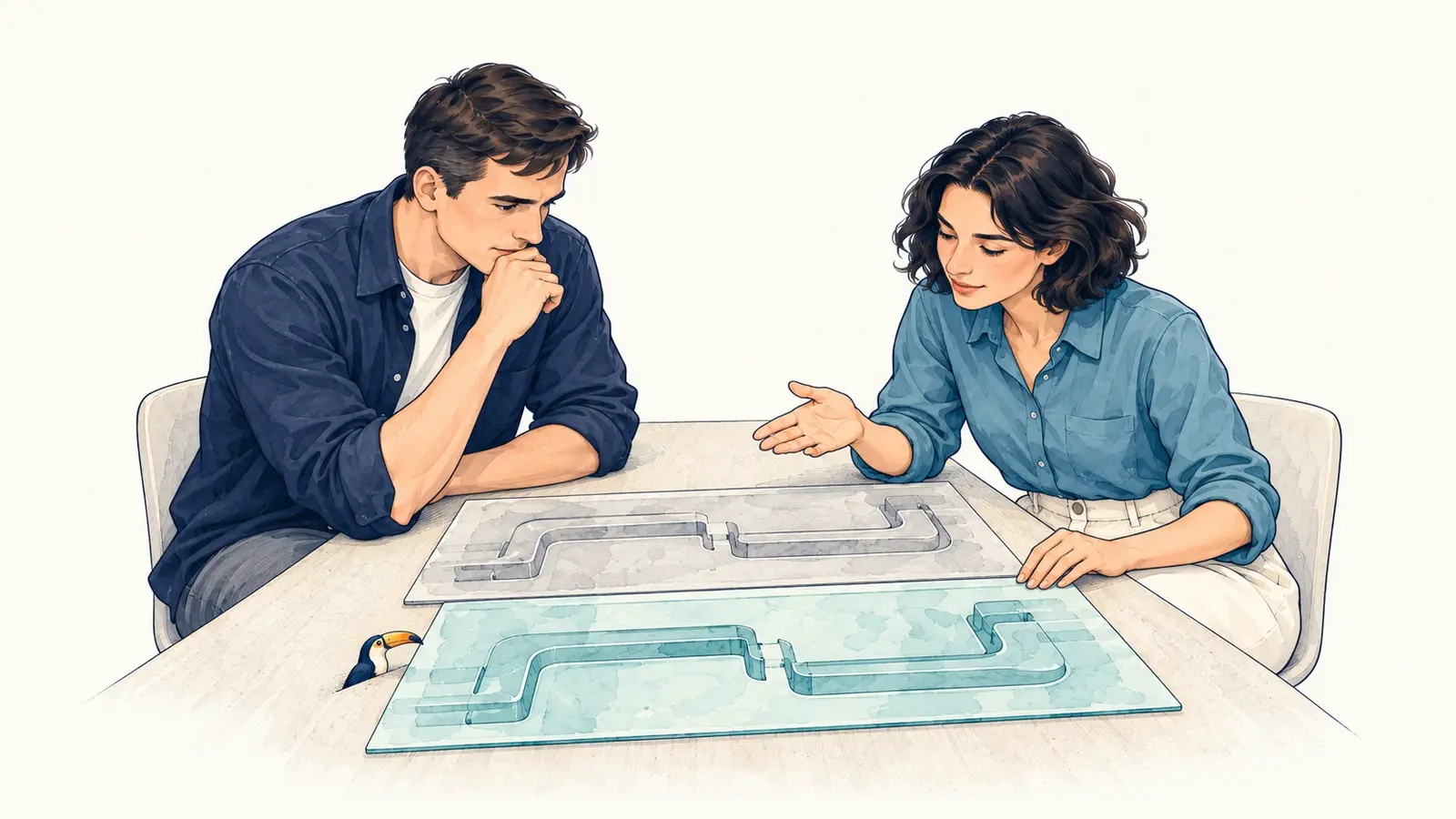
A coworker said something I liked: “Your dreams are my memories.”
Something one person hopes to do is already part of someone else's life. They remember the work it took, the compromises, and what happened after the exciting part was over. Depending on how it is said, the line can be an invitation to learn from that experience or a fairly efficient way to end a conversation.
I am interested in what responsibility comes with being the person who remembers.
In product work, experience helps you see what a proposal leaves out. Someone describes a discovery experience that understands what a viewer wants, and you start thinking about the difference between tonight's mood and a lasting preference. You wonder what the product actually knows about the catalog and how it will recover when it misunderstands the request. The idea has barely arrived, and you are already somewhere inside its operating problems.
Those questions can expose requirements that a proposal has not yet addressed. Recognizing a familiar idea also makes it easy to reach a conclusion before examining what is different about this attempt.
What exactly do we remember?
Consider a hypothetical proposal for conversational discovery in a streaming product. A viewer could describe what they feel like watching and refine the suggestions through conversation. Someone with experience of an earlier attempt might reasonably ask why this one should work.
I would want that history in the discussion. A prior attempt can contain evidence that is expensive to reproduce. Perhaps people found browsing easier than explaining what they wanted. Perhaps the conversation helped them articulate a preference but produced no better choices. Perhaps the recommendations were reasonable, while the descriptions of the titles were unreliable.
Remembering only that conversational discovery failed leaves out the information needed to judge the new proposal.
Suppose the earlier experience struggled because the catalog could not support the requests people made. A viewer asking for something funny, understated, and short enough to finish before bed needs information that a broad comedy label cannot provide. A more fluent conversation would still be working with that gap. Better catalog descriptions might justify investigating the idea again, provided those descriptions are accurate and cover enough of the eligible catalog.
Even then, there is more to learn. The product could understand the request correctly and still make choosing a title feel like work. I would want to see whether the conversation helps someone reach a satisfying choice, especially when a familiar row of recommendations is already available.
Experience can help identify the part worth testing before anyone commits to the entire experience. In this example, I would start by comparing suggestions made with the existing catalog information against suggestions made with the richer descriptions, using the same viewer requests and eligible titles. That could help establish whether the added information improves the suggestions. It would leave the value of the conversational interaction as a separate question.
A previous result has conditions
“We tried that before” deserves a follow-up: what did the attempt establish?
An earlier failure might tell us that people did not want the experience. It might tell us that the implementation could not deliver it well enough to find out. Sometimes the available evidence cannot distinguish those explanations, and the honest answer is that we still do not know.
I think this is one of the harder responsibilities of experience. Recalling a result feels more conclusive than reconstructing the circumstances behind it. The details may be incomplete. The people involved may disagree. A decision that was reasonable under the original constraints can become difficult to explain once those constraints have been forgotten.
For a new proposal, I would want to understand which relevant condition has changed and why that change could affect the outcome.
There are also perfectly good reasons to decline another attempt. The evidence may already be strong enough. The constraint may remain. The possible customer benefit may be too small to justify the work, especially against other things we could build. A proposal does not acquire a claim on the roadmap because it is ambitious or because someone is excited about it.
I would rather make that decision directly than send someone through a test whose result would have no realistic chance of changing my answer. Experience should help us judge when further investigation is worth its cost, including when the answer is no.
The part of “your dreams are my memories” I want to carry into product leadership is the ability to explain what the memory contains. With the discovery proposal, I would want to get specific enough to say where the earlier attempt broke down and ask: which of those constraints does this approach give us a credible way to remove?
This writing reflects my personal perspectives on product management, AI, and content discovery. It does not represent the official position of my employer or any affiliated organization.