Note
May 14, 2026
2 min read
Confession from the AI-assisted builder trenches
By Cristiano Pierry
Fast AI prototypes raise the bar for builder taste, product judgment, and knowing whether the result deserves users’ attention.
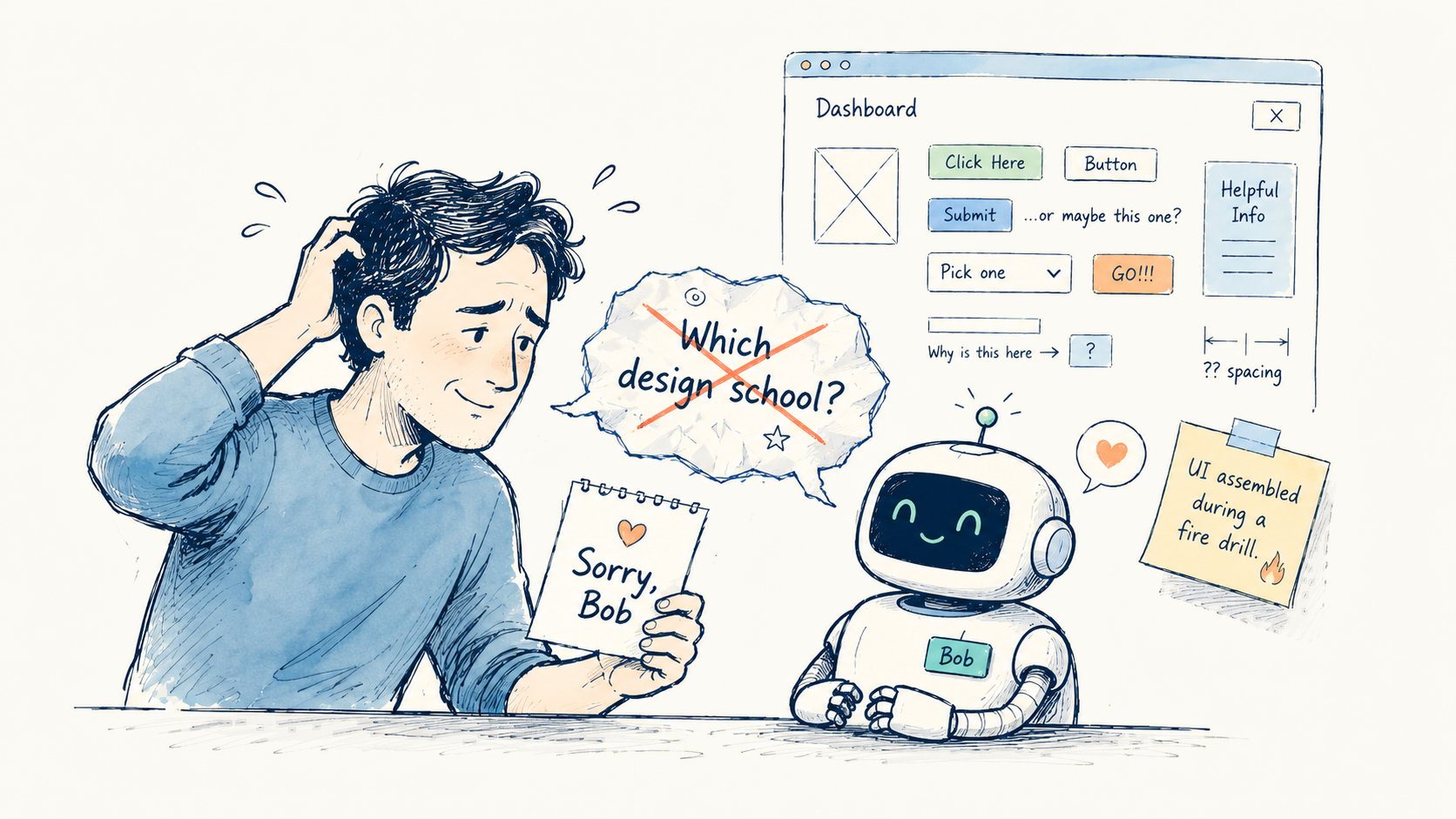
I recently asked Codex to help me build something.
The functionality was there. The bones were there. The UI, however, looked like it had been assembled during a fire drill by a spreadsheet with separation anxiety.
So I typed:
“I don’t know which design school you went to, but they owe us both an apology.”
Not proud of that.
No actual design school was involved. No designers should be blamed. Codex does not have feelings, tuition debt, or a portfolio site. Still, that was not my finest prompt.
It did remind me of something important. AI can compress the path from idea to prototype. It can write code, generate variants, connect workflows, summarize research, and reach a working version quickly. That speed makes taste and product judgment more visible, not less necessary.
We can now generate bad ideas, confusing experiences, and technically correct but emotionally strange products faster. The machine can help us move. It cannot reliably decide whether the direction deserves a user's attention.
Especially in discovery, personalization, search, and AI-enhanced experiences, the gap between “it works” and “it helps” is everything.

A recommendation can rank content without understanding intent. A search result can match keywords without helping someone decide. A chatbot can answer quickly without improving the experience. A prototype can compile and still have no taste.
I’m not always the version of myself I want to be when a tool hands me beige buttons, mystery spacing, and a modal that looks like it escaped from 2011.
I’ll do better next time.
Probably.
The more serious lesson is that a working demo only proves that something can run. The builder still has to decide whether it helps.
This writing reflects my personal perspectives on product management, AI, and content discovery. It does not represent the official position of my employer or any affiliated organization.