Article
August 20, 2026
3 min read
What Did the Demo Prove?
Demos, dashboards, and experiments can all be honest while still creating false confidence. Product value depends on matching the evidence to the claim and the next decision.
By Cristiano Pierry
This is the third article in a series about the evidence behind product decisions, following Your Team Needs Fewer Dashboards and More Dials and The A/B Test That Lies.
The question I care about during a demo is smaller than “Does it work?”: what did this prove?
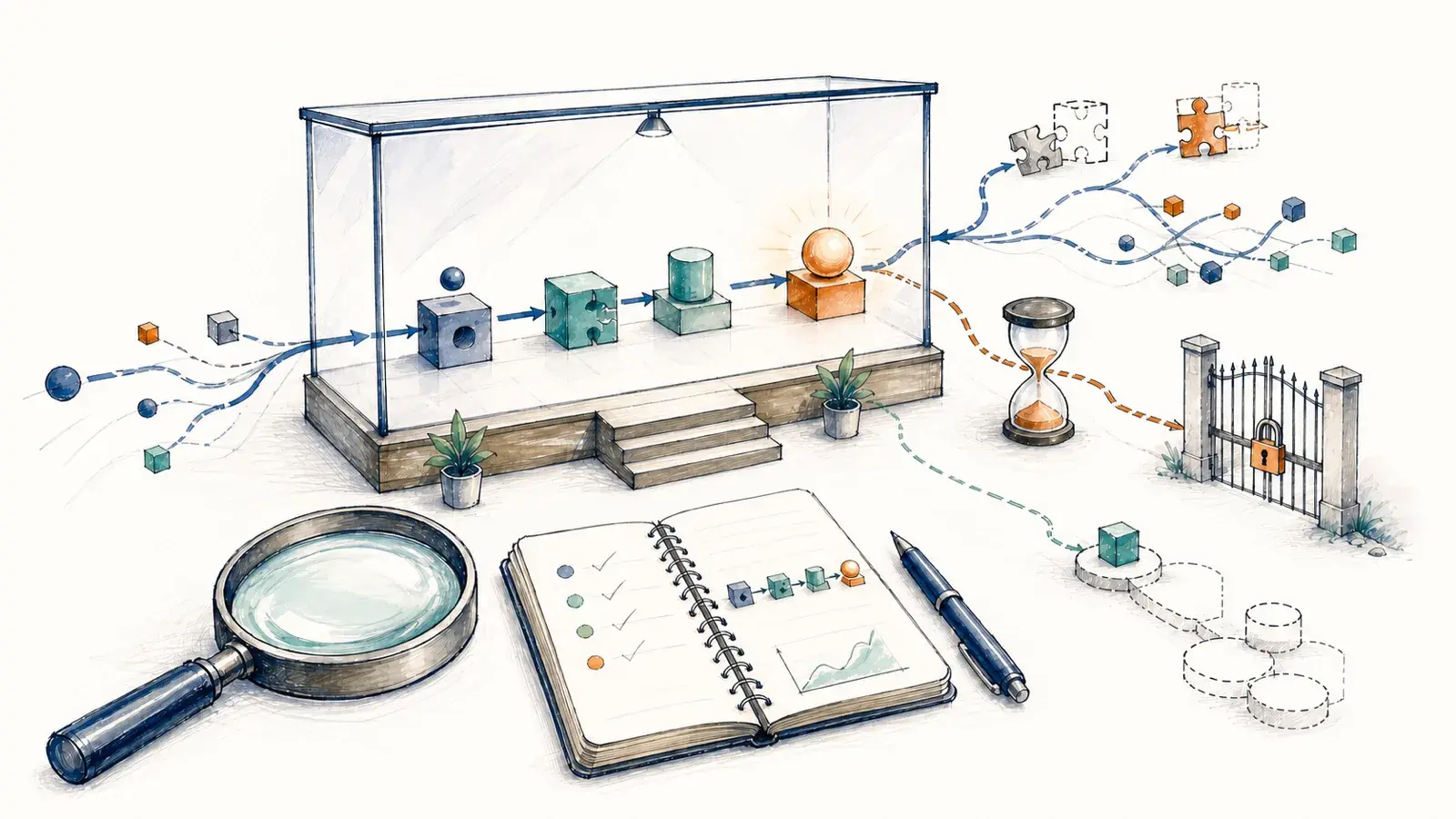
A demo selects a path through the product. The data is prepared. The request is known. The presenter can avoid a slow response, a missing permission, or a user who interprets the interface differently. That selection is necessary because a demo has to make one idea visible in a few minutes.
The trouble begins when the conditions disappear from the conclusion. Consider a conversational discovery demo. Someone asks for something funny, under ninety minutes, and appropriate to watch with a twelve-year-old. The assistant returns three eligible titles and gives a clear reason for each one.
That result may show that the interaction is understandable and that the system can produce a useful answer for the tested request when approved catalog facts are available. It does not yet show how the assistant behaves across representative requests, what happens when the facts conflict, or whether the explanations remain grounded when the easy path runs out.
The distinction can feel unnecessarily cautious while the demo is working. Everyone in the room can see the potential. The interface has moved from an idea in a document to something they can react to. The energy is useful. A good demo should change the conversation.
It should also leave a precise evidence claim behind:
This demo shows that the assistant can return grounded, eligible titles for the tested requests when approved catalog facts are supplied.
That sentence says more than “the demo worked,” but less than “the product works.” It records the conditions that made the result possible and makes the next unknowns visible.
The next decision determines how much more evidence is needed. If the team is deciding whether to continue discovery, the demo may have done enough. If the decision is to fund a limited build, the team needs to know whether the data and architecture can support a wider set of requests. Putting the feature in front of customers raises questions about failure recovery, latency, privacy, and the claims the assistant is allowed to make.
The team can decide that a narrow result is promising and worth another round without asking it to carry every future claim about demand, reliability, trust, and value. False confidence begins when demos, dashboards, and experiments answer their own questions correctly, but the organization silently replaces those questions with a larger one.
Before the review ends, I want one sentence beside the artifact: what it showed, under which conditions, and what remains unknown. If the room decides to invest, that sentence gives the next round of work an honest starting point.
This writing reflects my personal perspectives on product management, AI, and content discovery. It does not represent the official position of my employer or any affiliated organization.