Articles
Preparing the article archive.
Preparing the article archive.

Sep 23, 2026
A small team can explore a product idea in working code when its members have shared time and room to change existing commitments.

Sep 17, 2026
Stakeholders may also be customers or hold better customer evidence. Product judgment translates the organizational fact inside a requested solution and names its authority.
Sep 15, 2026
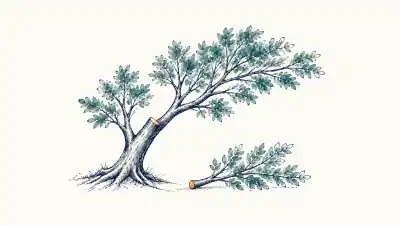
Strategy becomes credible when a team records the attractive work it declined, the customer promise it protected, and the evidence that would reopen the choice.
Sep 10, 2026
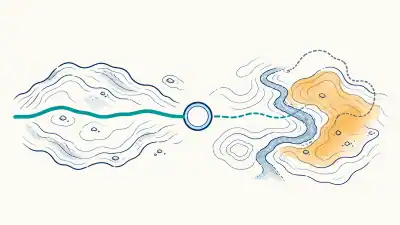
Roadmaps should coordinate today's choices without granting permanent authority to the assumptions that produced them.
Sep 8, 2026
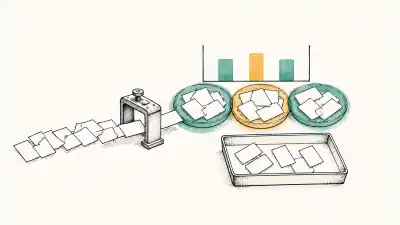
Good product judgment does not outrank data; it matches the next move to the available evidence and defines what could prove the judgment wrong.
Sep 3, 2026
A precise decision question tells a product team which evidence matters, how much confidence the choice requires, and who must own it.
Sep 1, 2026
An AI tutor can keep office hours open at any hour. The student still has to understand and account for the work.
Aug 27, 2026
When broad instructional help is always available, a university's scarce value becomes the people who challenge students and the work they learn to do together.
Aug 20, 2026
Demos, dashboards, and experiments can all be honest while still creating false confidence. Product value depends on matching the evidence to the claim and the next decision.
Aug 18, 2026
A generated deck should be designed for the next human edit, from the number of objects on a slide to the template, notes, and companion versions around it.
Aug 13, 2026
Model routing should follow the cost of being wrong: concentrate frontier reasoning where errors spread, then bound the remaining work with explicit contracts and evidence.
Aug 4, 2026
As AI-generated code outgrows human attention, trust will shift from routine source inspection to evidence, controls, and risk-based escalation.
Jul 30, 2026
Language compresses a product idea. AI gives high-agency product people more power to build enough of it to explore, learn from its behavior, and discover what the original words left out.
Jul 28, 2026
A/B tests can establish causal movement, but teams still need a metric hierarchy that distinguishes local engagement from durable product trust.
Jul 23, 2026
Metrics become management only when teams connect signals to authorized controls, decision rights, guardrails, and a memory of what happened next.
Jul 21, 2026
A product manager should understand the business consequence of an action. They should not have to become a systems administrator before asking an AI tool to help with their work.
Jul 18, 2026
Codex can order queued turns, but it cannot yet express a durable approval gate between them or constrain the current turn to the phase the user intended.
Jul 18, 2026
An AI AMA earns trust by separating general expertise from personal claims, screening every runtime surface, and treating privacy failures as release blockers.
Jul 14, 2026
AI product managers need faithful explanatory artifacts that turn complex recommendation systems into reviewable behavior, not just static requirements.
Jul 13, 2026
Trustworthy multi-agent systems emerge from evidence contracts, interruption rights, recovery paths, and human feedback—not from parallelism alone.
Jul 12, 2026
AI-forward thinking begins by questioning inherited architecture: let models interpret raw evidence, deterministic systems constrain and test it, and humans own the decision boundary.
Jul 10, 2026
AI products will earn broader adoption when they translate user intent into the right capability, instead of making people configure the machinery.
Jul 8, 2026
AI-assisted work becomes portable when teams preserve runnable systems, clear decisions, tests, and documentation beyond any one tool.
Jul 7, 2026
LLM-native discovery can unify streaming recommendations when grounded catalog truth, governed memory, validation, and feedback protect user trust.
Jul 6, 2026
Software is turning cameras into adaptive capture systems, pushing dedicated gear toward high-intent work while phones own everyday memory.
Jul 3, 2026
Teams move faster when precision serves the user experience, not internal certainty, and good enough means fit for purpose.
Jul 1, 2026
Modern discovery systems balance personal relevance, popularity, momentum, and strategic intent without letting promotion overwhelm user value.
Jun 29, 2026
AI is drawing product managers closer to systems, prototypes, evaluation, and the cross-functional judgment required to shape them well.
Jun 25, 2026
AI-native product teams can reduce handoffs through builder pods with stronger shared context, executable specs, earlier evaluation, and clear human ownership.
Jun 22, 2026
A sharp, slightly noisy wildlife image usually beats a clean miss; modern cameras make that exposure tradeoff easier to trust.
Jun 22, 2026
AI product teams need evaluation as a visible product surface, not a late report card, because fluent demos can hide weak or unsafe judgment.
Jun 21, 2026
AI-assisted work is only mature when the artifact carries a review surface: intent, evidence, checks, privacy, and human judgment.
Jun 8, 2026
AI-native product work rewards PMs who can turn intent into artifacts, inspect evidence, and own judgment across faster operating loops.
Jun 7, 2026
A Bosque photography guide becomes a product case study in turning messy research into trusted, structured, useful AI-assisted artifacts.
Jun 5, 2026
AI-assisted teams and traditional planning rituals are now using different clocks, forcing organizations to recalibrate estimates, expectations, and execution habits.
May 27, 2026
AI can help companies build faster, but without sharper product judgment, stronger architecture, and outcome-based measurement, they risk creating more software without more user value.
May 26, 2026
AI adoption becomes real when teams rebuild one recurring workflow around sharper intent, visible evidence, verification, and human-owned judgment.
May 25, 2026
Frontier tools can become a new operating layer between human intent and digital services, reducing the cognitive load software has pushed onto users.
May 25, 2026
Teams can make AI adoption concrete by redesigning one real workflow around evidence, reviewable artifacts, and accountable human judgment.
May 24, 2026
Streaming search is moving from exact-title retrieval toward conversational discovery that understands mood, context, constraints, and catalog truth.
May 23, 2026
AI makes visible work artifacts cheaper, which raises the standard for judgment, accountability, and the real work underneath the work.
May 22, 2026
Frontier coding agents can help product managers connect user intent to algorithmic system behavior across recommendations, search, personalization, and AI discovery.
May 21, 2026
AI should help teams do more with the same people by reducing handoffs, increasing builder range, and giving product judgment more cycles.
May 20, 2026
The 20/70/10 model keeps AI workflows fast without letting speed replace context, verification, judgment, or ownership.
May 19, 2026
Codex Log Viewer turns local Codex sessions into a searchable, privacy-conscious audit trail for the human intent behind AI-assisted software work.
May 13, 2026
An experimental workflow for making promotion review preparation more consistent and evidence-backed while preserving privacy, governance, and human accountability.
May 7, 2026
AI is a new capability layer that can make product teams faster, more creative, and more effective, but only when paired with strategy, judgment, and responsible guardrails.
May 6, 2026
AI changes how product teams ideate, prototype, evaluate, and launch. The real leadership challenge is turning that speed into better judgment and customer value.
May 1, 2026
AI changes who can contribute. But only if companies remove the friction between having an idea and making something real.
Apr 28, 2026
Why AI product teams need release systems that protect quality, trust, and the workflows users depend on.
Apr 26, 2026
AI-assisted development is making prototypes a shared workspace where teams can shape product ideas, narrative, and experience inside working software.
Apr 21, 2026
Once a discovery system starts speaking, accuracy alone is not enough. You have to evaluate fit, trustworthiness, and product impact together.
Apr 19, 2026
As AI expands the supply of plausible outputs, taste, context, exclusivity, trust, and distribution become more important sources of durable value.
Apr 14, 2026
A ninety-day approach to product management in search, personalization, experimentation, and learning for AI-native discovery teams.
Apr 13, 2026
The real return from early AI adoption is not mastering temporary tactics. It is building the judgment to evaluate, redesign, and govern the work before the tools make it look easy.
Apr 3, 2026
Early-talent recruiting makes a company’s leadership standards visible through communication, follow-through, and respect for candidates’ time.
Mar 28, 2026
Why AI getting better at writing code does not make computer science less valuable; it makes depth of judgment more important.
Mar 24, 2026
LLM coding tools could make version control less visible by capturing meaningful states, intent, and recovery paths as part of the work.
Mar 17, 2026
From a 3D cube in space to a published multiplayer experience — key lessons on working with AI coding tools that every builder should know.
Mar 11, 2026
What building software with my son taught me about the future of product management when the gap between idea and working software collapses.
Mar 9, 2026
Entry-level product work is changing, giving aspiring PMs new ways to demonstrate judgment, technical range, and end-to-end ownership.
Feb 14, 2026
Frontier AI is changing product work quickly, making continuous learning, practical building, and durable curiosity essential habits for PMs.
Feb 8, 2026
Should aspiring Product Managers invest in learning Python, or double down on modern AI tools like Lovable, v0, and Replit?
May 4, 2025
A bike helmet shopping journey shows where conversational search improves a decision and where missing constraints still weaken the result.