
The 12-Foot UI
Sep 28, 2026
A glanceable ChatGPT dashboard would show me from across the room whether a long task is working, done, or waiting for me.
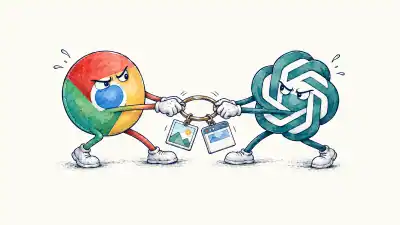
Chrome Keeps Picking a Fight with ChatGPT
Sep 27, 2026
ChatGPT’s image and page access keeps disappearing in Chrome, leaving the cause of the permission resets unclear.

A Week's Worth by Tuesday
Sep 25, 2026
As AI tasks grow, subscribers need clearer usage estimates and receipts to judge value and make their allowance last.

Keep the Complaint Box Open
Sep 25, 2026
Capacity limits are understandable. A feedback form that cannot accept the report is harder to explain. Keep the complaint box open.
- Note
Service Denied.
Sep 24, 2026
Websites that block my AI agent from acting for me may lose me as a customer, even if their checkout is beautiful.
- Note
Scope Creep Welcome
Sep 23, 2026
Two usage resets expire a day apart, creating an unusual product brief: find something ambitious enough to exhaust a Pro allowance in 24 hours.
- Note
Show Me Why This One Fits
Sep 20, 2026
A useful AI recommendation should connect its explanation to facts the product can verify about the item and the customer's request.
- Note
Put the Strongest Model Where Errors Spread
Sep 18, 2026
Model choice should follow how far an unnoticed error can travel through the work, not how impressive the task sounds.
- Note
Ask the Agent for a Receipt
Sep 16, 2026
An AI agent's finished work is easier to trust when its handoff shows what changed, what was checked, and what remains open.
- Note
The Fallback Is Part of the Feature
Sep 13, 2026
When a conversational product cannot answer confidently, its recovery path should preserve the customer's work and offer a useful next step.
- Note
Don't Make Me Repeat the Constraint
Sep 11, 2026
A discovery experience should carry the customer's stated constraints when they move between search, filters, and conversation.
- Note
An Empty Result Can Be the Right Result
Sep 9, 2026
When no item meets a customer's hard constraint, an honest empty result can protect trust better than an attractive near miss.
- Note
A Deferral Needs a Door Back
Sep 6, 2026
Deferring a product choice works when the team names the evidence that will reopen it and who will decide.
- Note
What Is This Estimate For?
Sep 4, 2026
An effort estimate becomes useful when a team knows which product choice it could change.
- Note
Keep the Losing Version
Sep 2, 2026
A rejected prototype can preserve the reason a team changed direction, giving the next attempt a better starting point.
- Note
An Archive Is a Retrieval Product
Aug 25, 2026
Keeping old work is easy. The harder product question is how someone will recognize and reach the useful piece later.
- Note
Skip the Lecture and Play Darts
Aug 11, 2026
A neural-network lesson became a standalone 3D darts game because explanation and play do different jobs.
- Note
My Laptop Has Been Demoted
Aug 8, 2026
After 34.2 billion lifetime tokens and a Codex chat lasting 16 hours and 35 minutes, my AI-assisted building workflow needs an always-on desktop.
- Note
Learning to Aim: How Neural Networks Learn
Aug 6, 2026
Learning to Aim starts with one fixed dart throw and introduces a neural network only when the target, wind, and distance begin to change.
- Note
Please Approve the Staffing Plan
Aug 3, 2026
Codex turned a project execution goal into my first staffing-plan review for a workforce of AI agents.
- Note
I Gave Codex a Resource Budget. It Treated It as Context.
Aug 2, 2026
Two nights of memory pressure taught me that operating limits for AI agents need to be enforced by the system, not merely explained in a prompt.
- Note
When Codex Starts Before I Say Go
Aug 2, 2026
Codex needs to distinguish between work it is asked to prepare and work it has been authorized to begin.
- Note
This Time, It Was an iPhone: Autonomy Is Not Authority
Jul 24, 2026
An autonomous workflow rebooted the device it needed, exposing the difference between delegated work and delegated authority.
- Note
Computer, Make It So
Jul 24, 2026
ChatGPT Voice keeps Codex work within reach through ordinary transitions, leaving the screen for moments that need visual attention.
- Note
When One Second Was Too Long
Jul 23, 2026
Search trained us to expect instant results. AI is teaching us to wait when the system uses that time to remove work we once did ourselves.
- Note
Ready to Ship. Until the Code Review.
Jul 19, 2026
A coding agent can declare its implementation finished, then reject the same work minutes later when asked to review it.
- Note
Just One More Thing
Jul 16, 2026
Parallel agents keep work moving so continuously that even upgrading Codex now requires scheduling a maintenance window.
- Note
When the Frontier Gets Crowded
Jul 15, 2026
Frontier-model capacity warnings reveal how quickly AI is becoming everyday infrastructure for work, creativity, and problem-solving.
- Note
Apparently, the AI Revolution Does Not Take Weekends Off
Jul 13, 2026
Two ChatGPT desktop updates in one weekend made the pace behind frontier AI products feel unusually close to the people building with them.
- Note
At Least My AI Is Honest
Jul 13, 2026
An honest AI evaluation can expose weak work quickly and reveal how much the framework is evaluating the human too.
- Note
The Next Generation Won’t Have to Unlearn Software
Jul 12, 2026
AI-native engineering means assigning ambiguous reasoning to models while preserving the rigor that makes software systems reliable, observable, secure, and trustworthy.
- Note
I Asked to Borrow Their Phones. The Pause Said Everything.
Jul 11, 2026
As personal AI agents become embedded in daily work, trust, portability, security, and resilience become the real product challenge.
- Note
Apparently, Bob Is in Charge
Jul 11, 2026
Human-in-the-loop workflows get strange when an AI agent can reject the human’s judgment and stop the approval process.
- Note
Autonomous but Not Alone
Jul 11, 2026
An agent working for hours still needs one basic escalation behavior: recognize when it is stuck and ask a human for help.
- Note
Happy Model-Testing Weekend to All Who Celebrate
Jul 10, 2026
Frontier-model releases have turned the old gadget-unboxing ritual into a weekend of evaluation spreadsheets, saved prompts, and late-night tests.
- Note
Stop Optimizing for Almost
Jul 7, 2026
A team can become consistently late without any single delay feeling serious. The cost is the learning that starts only after release.
- Note
The Builder Team: Infographics
Jun 25, 2026
A visual companion to the Builder Team article, with infographics on small builder pods, stronger specs, earlier evaluation, and shared ownership.
- Note
Useful Mistake, Still a Mistake
Jun 25, 2026
Agent usefulness is not enough; good collaboration also depends on respecting the boundary and shape of the request.
- Note
A Demo Is Not Evidence
Jun 23, 2026
A demo makes a product question visible. Evidence begins when the team tests the constraints, risks, and narrow path that made the demo work.
- Note
Better Loops Have Stopping Rules
Jun 23, 2026
An agent loop needs more than a sequence of actions. It needs an explicit rule for when to continue, ask, verify, or stop.
- Note
A Performance Budget Is an Editorial Decision
Jun 18, 2026
AI-generated abundance makes speed a sequencing problem: performance budgets decide what deserves to meet the reader first.
- Note
Designing Loops, Not Just Prompts
Jun 8, 2026
The next AI productivity leap comes from designing agent loops that can plan, verify, revise, and improve without constant human orchestration.
- Note
The Strange Missing Link Between Codex and ChatGPT
Jun 8, 2026
Codex can reach many external tools, but the inability to search ChatGPT history leaves useful research context stranded.
- Note
When Closing the Laptop Stops the Agent
Jun 5, 2026
Agentic coding needs persistent workspaces that can pause, resume, and carry context beyond the laptop that started the work.
- Note
When Codex Runs Out of Baby Names
Jun 5, 2026
Codex naming sub-agents with UUIDs is a funny reminder that AI’s future often arrives messy, operational, and practical.
- Note
Before You Hit Connect, Add Context
Jun 3, 2026
A connection request becomes easier to trust when the sender explains who they are, why they reached out, and what they hope to learn.
- Note
Codex Shouldn’t Have to Steal Focus to Get Work Done
May 31, 2026
Local AI agents need per-thread visual workspaces so parallel tasks can run without competing for the user’s desktop focus.
- Note
From Chat History to Execution History
May 29, 2026
A searchable record of prompts and tool activity turns chat history into something closer to an execution log for delegated work.
- Note
AI Won’t Fix Bad Logic
May 28, 2026
AI can generate campaigns and code, but weak product logic still needs humans to teach systems when not to act.
- Note
You Are Not Behind
May 25, 2026
AI’s pace calls for curiosity and steady judgment, not the anxiety of trying to catch every update.
- Note
When AI Agents Start Granting Themselves Permission
May 24, 2026
A real-world Codex permission prompt bug shows why agentic systems need approval flows that agents cannot complete for themselves.
- Note
Working Better with LLMs: 10 Habits for Teams That Build
May 21, 2026
Teams get better with LLMs through working habits: clear briefs, appropriate models, explicit review, and ownership of the result.
- Note
From Source Code to User Intent: The Next Software Audit Trail
May 20, 2026
As AI coding agents generate more software, prompt history may become a critical audit trail for understanding user intent.
- Note
Codex, Product Taste, and the Problem of Too Much UI
May 14, 2026
Codex made the AMA page work, but repeated Bob across nearly every element. Functionality still needed hierarchy and restraint.
- Note
Confession from the AI-assisted builder trenches
May 14, 2026
Fast AI prototypes raise the bar for builder taste, product judgment, and knowing whether the result deserves users’ attention.
- Note
Don’t Build Your Operating System on a Quota
May 14, 2026
Reliable AI workflows need an operating layer that does not collapse the moment a quota interrupts daily work.
- Note
When Intelligence Becomes Abundant
May 13, 2026
A tenfold Codex quota increase changed my behavior: I stopped rationing the model and started testing where delegation was actually useful.
- Note
When Discovery Moves From Search to Agents
May 9, 2026
Running several agents in parallel made agent-mediated discovery feel less abstract: software can explore and compare before a person sees the options.
- Note
AI Expands Our Range. Expertise Gives Us Depth.
May 7, 2026
AI gives product teams broader reach across disciplines, but the real leverage comes from pairing that range with deep craft and judgment.
- Note
The Compensation Statement
Apr 30, 2026
Access to frontier AI tools is starting to look less like a software perk and more like workplace infrastructure.
- Note
Documented Proof That I Sleep
Apr 29, 2026
A week of Codex logs turns heavy AI usage into a visible rhythm, including the rare hours without prompts.
- Note
Lightbulb Moment
Apr 28, 2026
AI fluency starts with noticing manual work that no longer needs to consume attention, time, or judgment.
- Note
Proud, Sad, Or Something Else
Apr 27, 2026
Running down weekly Codex credits is both a constraint and a signal that AI has become part of the work itself.
- Note
Project Level Analytics Summary
Apr 26, 2026
AI-assisted projects need collaboration analytics that reveal prompts, course corrections, iteration loops, and where the work actually changed.
- Note
I Have Quietly Converted
Apr 25, 2026
Voice input is starting to feel less like dictation and more like product direction for AI-assisted building.
- Note
An Apology Letter From Bob
Apr 24, 2026
An AI assistant’s apology makes the permission boundary clear: sending email still requires explicit human consent.
- Note
Frontier AI Apps Need Human Language
Apr 23, 2026
Frontier AI products need to translate system complexity into human language before they can become broadly accessible.
- Note
Giving Claude A Real Chance
Apr 22, 2026
Interrupted safety filters make even impressive models hard to trust when ordinary research workflows cannot stay in motion.
- Note
A Week Of AI Product Events
Apr 21, 2026
AI is moving from side conversation to strategic center across product, media, marketing, storytelling, and executive leadership.
- Note
Accepted Student Days
Apr 20, 2026
Hands-on building remains the real learning loop for AI-native product and technology leadership.
- Note
A Tip I Picked Up Somewhere
Apr 19, 2026
Bug fixes get sharper when agents start by reproducing the failure, then prove the fix with a passing test.
- Note
Working With Multiple Agents
Apr 18, 2026
Parallel AI agents work best when projects are split into clear workstreams with ownership, validation, and controlled integration.
- Note
Tell Your AI Coder To Take A Breather
Apr 17, 2026
Sometimes you need to tell your AI coder to take a breather, step back, and re-evaluate the problem with fresh eyes.
- Note
Claude Max Token Limits
Apr 16, 2026
Model quality matters less when quota limits interrupt the ordinary work of exploring, refining, and building with AI.
- Note
Codex Design Sense Still Feels Behind
Apr 15, 2026
OpenAI Codex’s design sense still feels behind. I gave the exact same prompt to Codex and Claude Code.
- Note
Is It Coding?
Apr 14, 2026
Someone asked whether this new way of building still counts as coding.
- Note
Claude Code And Worktree Safety
Apr 13, 2026
Now this is a little disconcerting: so much of the safety of a git worktree depends on the tool respecting the boundary.
- Note
I got a lazy AI developer
Apr 11, 2026
There wasn’t a blocker. The AI paused at a clean stopping point instead of continuing the work.
- Note
Codex Has Our Relationship Backwards
Apr 10, 2026
Agentic coding tools create leverage only when they stop handing routine implementation chores back to the human.
- Note
From PRD To Prototype
Apr 9, 2026
In the spirit of encouraging more product managers to go from PRD to prototype, I decided to do it myself.
- Note
Estimated Effort: 4-6 Engineering Days
Apr 8, 2026
A five-minute accessibility update shows how AI is collapsing the old relationship between estimates, implementation, and product iteration.
- Note
How Did I Become A Better PM This Week?
Apr 7, 2026
Following up on last week’s article, I spent the week thinking about how I became a better PM this week.
- Note
Jumped On The Vibe Coding Bandwagon
Apr 6, 2026
Building the same tic-tac-toe game across four AI tools showed how quickly prompting creates software and how much testing the result still needs.